Do Reliance Natural Gas Water Heaters Have Dielectric Nipples?
Reliance natural gas water heaters often leave homeowners wondering about dielectric nipples and whether they are included from the factory. This post provides a clear answer, explains why dielectric nipples matter, and walks you through checking, installing, and maintaining them for maximum water heater lifespan.
Simply put, most Reliance natural gas water heaters do NOT come with dielectric nipples pre-installed. Only the inlet and outlet connections are standard brass or steel fittings. You typically need to purchase and install dielectric nipples separately to prevent galvanic corrosion between dissimilar metals.
Key Takeaways
- Reliance natural gas water heaters generally lack factory-installed dielectric nipples, requiring separate purchase.
- Dielectric nipples prevent galvanic corrosion between copper plumbing and steel water heater tanks, extending heater life.
- Installing dielectric nipples is a simple DIY task that can save you hundreds in tank replacement costs.
- Always check local plumbing codes — many jurisdictions mandate dielectric nipples for new water heater installations.
- Using plastic or brass nipples as alternatives may work, but dielectric nipples offer the best protection.
What Are Dielectric Nipples and Why Do They Matter?
Dielectric nipples are short threaded fittings that connect the water heater tank to your home’s plumbing pipes. They contain a special plastic or rubber core that electrically insulates the two different metals — typically the steel tank and copper piping — from direct contact. Without this insulation, an electrochemical reaction called galvanic corrosion rapidly eats away at the weaker metal.
Water heater manufacturers like Reliance design their tanks with steel or glass-lined steel. Copper pipes are common in residential plumbing. When these two metals touch in the presence of water, they form a small battery that corrodes the steel tank nipple.
Over time, this can lead to leaks, rust contamination, and premature tank failure.
- Dielectric nipples prevent galvanic corrosion by breaking the electrical circuit.
- They are often required by building codes (e.g., IPC and UPC) for new water heater installations.
- A single set of dielectric nipples costs around $5–15 and can add years to your tank’s life.
- Without them, you may void your water heater’s warranty — Reliance explicitly states this in their manual.
- They are available in 3/4″ NPT and 1″ NPT sizes to match standard water heater connections.
According to the American Society of Plumbing Engineers, galvanic corrosion is responsible for up to 15% of all premature water heater failures. Using dielectric nipples eliminates the most common cause of this corrosion.
Warning: Do not rely on dielectric unions alone — they prevent corrosion at the joint but not inside the nipple. True dielectric nipples have an internal insulating liner that blocks the electrochemical path completely.
Do Reliance Natural Gas Water Heaters Come With Dielectric Nipples?
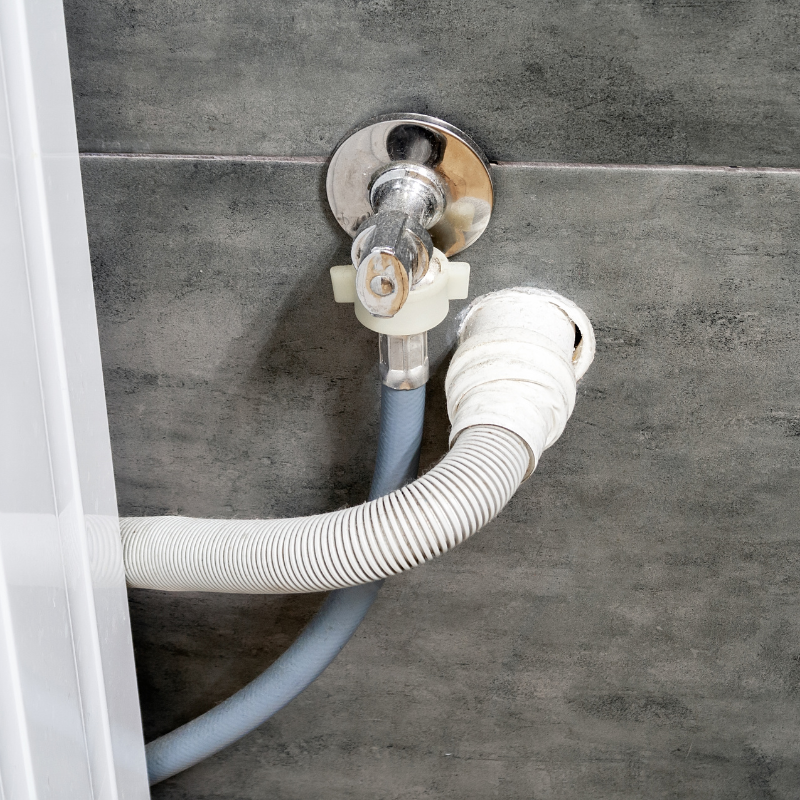
The short answer is no. Reliance natural gas water heaters, like those from Rheem, A.O. Smith, and Bradford White, typically ship with standard brass or galvanized steel nipples on the cold inlet and hot outlet.
These nipples do not have an insulating core. The manufacturer expects the installer to add dielectric nipples or unions as needed for the specific plumbing system.
Check the installation manual for your specific model (e.g., Reliance 6 or 9 series). In most cases, the manual will state: “Use dielectric nipples if connecting to copper or galvanized steel piping.” Some Reliance models may include a plastic dip tube on the cold side, but that is for internal water mixing, not for dielectric protection.
| Reliance Model Series | Factory Nipple Material | Dielectric Nipple Included? |
|---|---|---|
| 6 Series (Natural Gas) | Brass | No |
| 9 Series (Natural Gas) | Galvanized Steel | No |
| Premier Series (Natural Gas) | Brass with dip tube | No |
As the table shows, across Reliance’s popular natural gas water heater lines, you will not find factory dielectric nipples. Always plan to buy a set during installation.
How to Check If Your Reliance Water Heater Has Dielectric Nipples
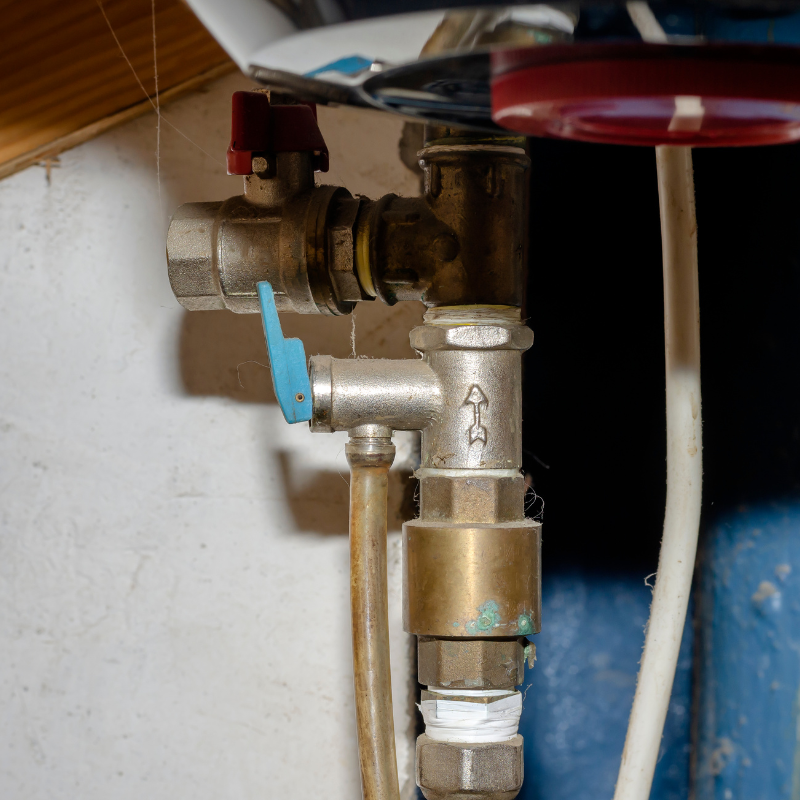
You can quickly determine whether your Reliance water heater already has dielectric nipples by looking at the top of the tank. Dielectric nipples have a distinct appearance: a brass or hex-shaped exterior but a visible plastic or rubber ring where the nipple meets the tank. If you see a continuous metal surface from the tank to the pipe, it is a standard nipple.
Here is a step-by-step inspection process:
- Turn off the gas and water supply to the heater.
- Look at the cold water inlet (usually the left side with a blue indicator) and the hot water outlet (right side, red indicator).
- Check for a brass or metal nipple with a visible seam or color difference near the tank top. Dielectric nipples often have a black or white plastic ring between the metal and the tank.
- Use a flashlight to examine the bottom of the nipple. If you see a plastic insert inside the threads, it is a dielectric nipple.
- If the nipple is entirely brass or steel and shows no plastic, it is not dielectric.
Many homeowners mistake a thin plastic dip tube (inserted into the cold inlet for water mixing) as a dielectric component. That tube does not provide corrosion protection at the threaded connection. Only a dedicated dielectric nipple with an insulating core suffices.
- The average homeowner can complete this check in under 5 minutes.
- If you purchased a new Reliance unit from a big-box store, ask the staff whether dielectric nipples were included in the box (rarely are).
- Some water heaters come with “dielectric unions” instead of nipples — but those protect the pipe joint, not the nipple itself.
Tip: If your water heater is older than 8 years and you’ve never replaced the nipples, consider swapping them anyway. Even if you have dielectric nipples, they can degrade over time. Installing fresh ones is cheap insurance.
What Happens If You Don’t Use Dielectric Nipples?
Connecting copper pipes directly to a steel water heater tank without dielectric nipples sets the stage for rapid galvanic corrosion. The steel nipple becomes the anode and dissolves into the water, leaving behind rust, pinhole leaks, and sediment. Over time, this can cause the tank connection to weaken and eventually fail completely, leading to a flood.
Statistics from the Insurance Institute for Business & Home Safety show that water heater failures cause an average of $4,000 in water damage per claim. Many of these failures trace back to corroded nipples that could have been prevented with a $10 part.
| Issue Without Dielectric Nipples | Consequence | Cost Impact |
|---|---|---|
| Galvanic corrosion at pipe joint | Leakage, rust in water | $50–150 for nipple replacement |
| Tank connection failure | Severe leak, flood risk | $500–4,000+ in damages |
| Warranty voided | No coverage for tank corrosion | Full replacement cost ($800–1,500) |
In addition to financial loss, a corroded nipple can introduce rust and metallic particles into your hot water supply, staining laundry and fixtures. The National Sanitation Foundation notes that water quality can degrade significantly when galvanic byproducts enter the system.
How to Install Dielectric Nipples on a Reliance Water Heater
Installing dielectric nipples is a straightforward DIY project that requires only basic tools. You will need two dielectric nipples (3/4″ NPT standard for most residential water heaters), pipe joint compound or Teflon tape, and two adjustable wrenches. Always follow the manufacturer’s torque specifications — overtightening can crack the plastic insert.
Follow these steps:
- Turn off the gas valve and shut off the cold water supply to the water heater. Open a hot water faucet to relieve pressure.
- Disconnect the existing copper or flex pipes from the top nipples. If the old nipples are corroded, you may need a penetrating oil like WD-40.
- Remove the old nipples using a pipe wrench. Turn counterclockwise. If they are stuck, heat the area gently with a propane torch (take care near gas lines).
- Apply Teflon tape (three wraps clockwise) to the threads of the new dielectric nipples. Do not use tape on the plastic insert area.
- Screw the dielectric nipples into the tank ports by hand until snug. Then tighten with a wrench for an additional 1/2 to 3/4 turn.
- Reattach the water supply lines using flexible braided hoses or copper tubing. Use new washers if needed.
- Turn the water back on, check for leaks, and relight the pilot or turn on the gas supply.
After installation, run a hot water faucet for a few minutes to flush any debris. The entire process typically takes 30–60 minutes for a DIYer.
| Tool or Material | Purpose |
|---|---|
| Two dielectric nipples (3/4″ NPT) | Replace standard nipples |
| Teflon tape or pipe dope | Seal threads |
| Adjustable wrench (10″ or 12″) | Tighten nipples |
| Plumber’s putty (if needed) | Seal flex hose connections |
If you are not comfortable working with gas lines or water connections, hire a licensed plumber. The cost is usually $75–150, which is still far less than a flood repair.
Important: Always use dielectric nipples rated for potable water (lead-free brass). Some cheap imports contain lead and violate NSF/ANSI 61 standards. Look for the “NSF 61” stamp on the package.
Alternatives to Dielectric Nipples for Reliance Water Heaters
If you cannot find genuine dielectric nipples, there are a few alternatives that offer partial protection. The most common substitute is a dielectric union — a fitting that connects two pipes with a non-conductive washer. However, unions only isolate the joint, not the nipple itself, leaving the tank connection vulnerable.
Another option is to use brass nipples. Brass is less reactive with steel than copper, but it does not fully prevent galvanic corrosion. Over many years, brass can still experience pitting.
Plastic (PVC or CPVC) nipples provide complete electrical isolation but may not meet local codes for hot water near the tank (CPVC is rated for 200°F, so it can be used for the hot side).
- Dielectric unions — best for flexible pipe connections, not a direct nipple replacement.
- Brass nipples — better than steel, but not as effective as true dielectric nipples.
- CPVC nipples — excellent insulation, but check temperature rating (hot outlet can exceed 140°F).
- Stainless steel nipples — corrosion-resistant but costly and can still cause galvanic issues with copper.
The Plumbing-Heating-Cooling Contractors Association recommends dielectric nipples as the primary solution for steel-to-copper connections. Most local plumbing codes reference ASTM F493 for dielectric fittings, so it is wise to stick with the approved product.
Common Mistakes When Connecting Reliance Water Heaters
Even experienced DIYers can make errors when installing dielectric nipples. One frequent mistake is applying Teflon tape to the plastic insert. The tape can tear and leak, or it may interfere with the insulating function.
Use tape only on the threaded metal portion, not on the plastic core.
Another error is mixing dielectric nipples with dielectric unions. Using both is unnecessary and can create too many joints, increasing leak risk. Pick one method: either use dielectric nipples on the tank and standard piping, or use regular nipples with dielectric unions at the pipe connection.
The former is cleaner and more reliable.
Overtightening is a third common issue. Dielectric nipples have a plastic core that can crack if overtorqued. Hand-tighten plus a half-turn with a wrench is sufficient.
The table below lists typical torque recommendations.
| Mistake | Result |
|---|---|
| Using pipe dope on plastic core | Leakage at insert |
| Overtightening nipple | Cracked plastic, leak |
| Using steel or brass nipples without insulation | Galvanic corrosion |
| Forgetting to flush tank after installation | Sediment clogging |
Finally, do not assume that a new water heater always includes dielectric nipples. Always verify before installation. According to Consumer Reports, about 70% of water heater failures in the first 10 years are due to corrosion-related issues, most preventable with proper fittings.
Frequently Asked Questions
Do all Reliance natural gas water heaters need dielectric nipples?
Yes, if your home uses copper or galvanized steel water lines. Reliance tanks are steel, so connecting directly to dissimilar metals causes corrosion. Dielectric nipples are the standard solution.
Even if your local code doesn’t require them, it’s wise to install them.
What size dielectric nipple fits a Reliance water heater?
Most residential Reliance natural gas water heaters use 3/4-inch NPT (National Pipe Thread) connections. Some larger models may use 1-inch NPT. Always check your tank’s label before purchasing.
The nipple length is usually 2 to 3 inches.
Can I use a brass nipple instead of a dielectric nipple?
Brass nipples are better than steel nipples but do not provide full electrical isolation. Over time, galvanic corrosion can still occur between brass and the steel tank, especially in hard water areas. True dielectric nipples with a plastic core offer superior protection.
Will using dielectric nipples void my Reliance warranty?
No. In fact, not using dielectric nipples when required by the installation manual may void the warranty. Reliance explicitly states that connections to dissimilar metals must be made with dielectric fittings.
Always follow the manual.
How long do dielectric nipples last?
With proper installation, dielectric nipples typically last as long as the water heater itself (8–12 years). The plastic core can degrade over time in very hot water, but replacements are inexpensive. Check them during annual water heater maintenance.
Final Thoughts
Reliance natural gas water heaters do not come with dielectric nipples from the factory, but installing them is a cheap and essential step. Protecting your tank from galvanic corrosion will extend its life and save you from costly water damage. Always verify your connections, use quality fittings, and follow local plumbing codes.
A few dollars spent now can prevent hundreds in repairs later.
Sponsored / affiliate links. As an Amazon Associate I earn from qualifying purchases. I may earn additional commission from eligible campaigns.