Furnace Startup Checklist for the First Cold Day
On the first cold day, use a 6-step furnace startup checklist: verify the thermostat calls for heat, confirm power and gas supply, inspect the door switch and filter, check that supply registers are open and return grilles are not blocked, and, on high-efficiency units, check the condensate drain, then listen for about 10 to 15 minutes for the normal sequence of blower start, igniter or burner operation, steady heat, and a shutdown that does not trip a safety device; stop and call service if you smell gas, see soot, or the burner won’t light after one cycle. Missing those checks can leave you without heat and turn a small fault into a costly repair. This guide puts safety first, then separates normal startup quirks from warning signs that mean stop and call for service.
Start sequence, power, gas, and filter checks


Start with controls and airflow, then move to safety checks. If the furnace is a high-efficiency model, add the condensate drain and float switch to that first pass. Do not keep resetting the system if you smell gas, hear repeated failed ignition, or see a shutdown that points to a safety device.
Set the thermostat to heat
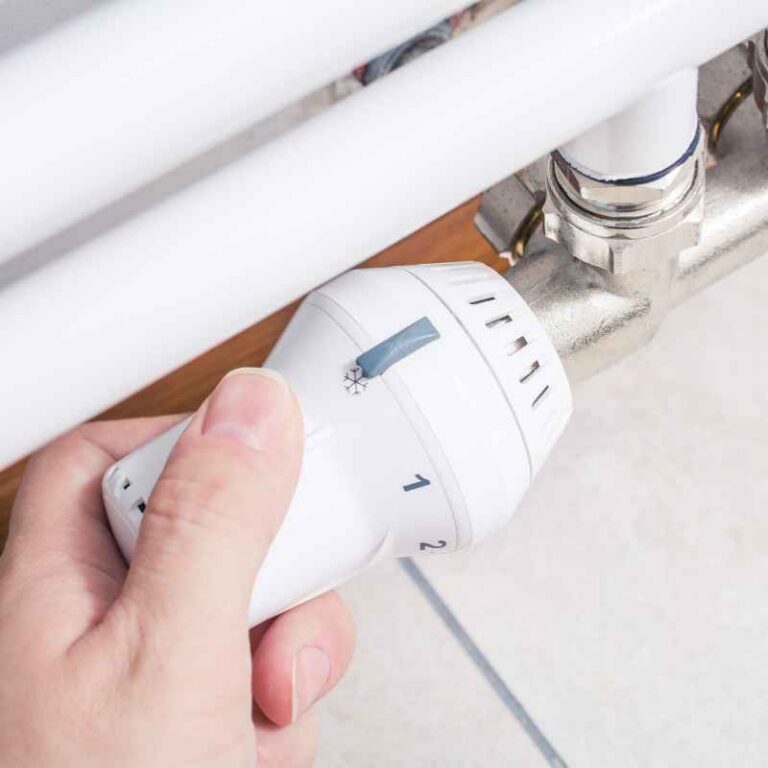
Put the thermostat in heat mode and raise the setpoint above room temperature so it asks for heat. A proper response means the furnace should begin its start sequence after a short delay. After months of inactivity, also check whether the room temperature reading still looks believable compared with the actual room conditions.
Check power, gas, and the door switch
Confirm the furnace switch is on and the breaker has not tripped. Make sure the gas valve is open and aligned with the pipe; a closed valve can prevent ignition. The furnace door interlock switch must be fully seated, and the panel cannot be open or misaligned, or the unit may not run at all.
Inspect the filter before the first call for heat
A clogged furnace filter can restrict airflow and trigger a high-limit shutdown. Replace it if it looks visibly loaded with dust or if the return grille seems weak. If the filter is dirty, change it before another start attempt, then give the furnace one full heat call to respond.
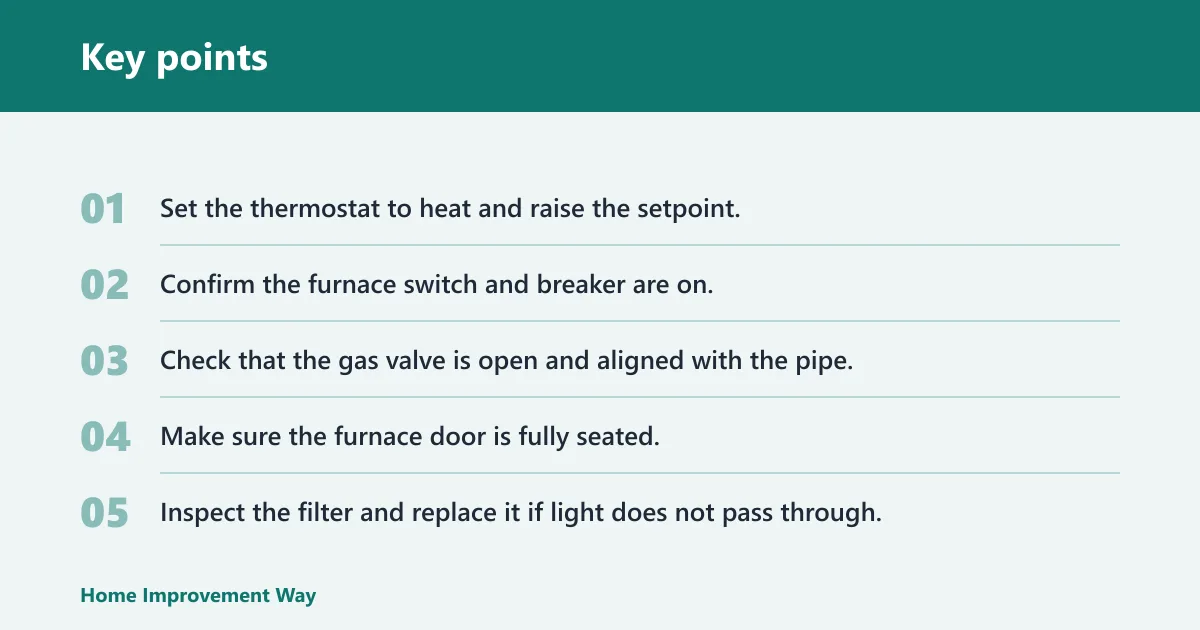
- Set the thermostat to heat and raise the setpoint.
- Confirm the furnace switch and breaker are on.
- Check that the gas valve is open and aligned with the pipe.
- Make sure the furnace door is fully seated.
- Inspect the filter and replace it if light does not pass through.
- Watch the first startup cycle and stop if the furnace shows a warning sign from the decision table.
Furnace startup decision table
| Symptom | Likely cause | Safe homeowner check | Stop-now warning | Call for service? |
|---|---|---|---|---|
| No heat | Thermostat not calling, power off, gas valve closed, door switch not seated, or lockout | Check heat mode, setpoint, breaker, switch, gas valve position, and door panel fit | No gas odor, but the furnace never starts after one careful check | Yes if all basic checks pass |
| Click, then no flame | Hot surface igniter or spark ignition failure | Confirm the thermostat call and that the door is seated | Repeated clicking, gas smell, or the same failure on the next try | Yes; technician diagnosis is usually needed |
| Lights, then shuts off | Dirty or failing flame sensor, weak flame signal, or burner issue | Observe whether the furnace completes one brief start before shutting down | Gas smell, soot, or repeated restart attempts | Yes |
| Burning smell after summer | Dust burning off warm metal and heat exchanger surfaces | Run one heat cycle and watch whether the odor fades within a short startup period | Sharp electrical odor, smoke, or odor that gets stronger instead of fading | Yes if the smell does not fade or seems wrong |
| Gas odor | Unburned gas, valve problem, or ignition failure | Turn the furnace off and check for a nearby odor only if you can do so without delay | Any gas smell at all | Yes, immediately |
| Short cycling | Restricted airflow, clogged filter, overheating, or limit switch trip | Check the filter and supply/return openings | Furnace shuts off after brief runs again and again | Yes if it repeats after a filter change |
| Blower runs but air is cool | Ignition failure, gas issue, or control problem | Confirm the system had a heat call and that the filter is not blocked | No warm air after the furnace has tried to start | Yes |
| Water near a high-efficiency furnace | Clogged condensate drain, trapped condensate, or float switch trip | Check for visible pooling near the condensate line and drain area | Water near the cabinet or repeated shutdown after startup | Yes |
| Repeated lockouts | Ignition failure, flame sensor trouble, pressure/vent issue, or safety device trip | Note how many restart attempts fail in a row | The unit locks out after multiple tries | Yes |
| Burner rollout or yellow tipping | Combustion problem, venting issue, or burner fault | Do not open the cabinet to inspect the flame yourself | Any sign of rollout, soot, or unstable combustion | Yes, stop using the furnace |
| Cool air from vents after start | Delay in ignition, airflow-only run, or burner shutdown | Check that the thermostat is still in heat and the filter is not blocked | The furnace never transitions to steady heat | Yes if the next cycle does the same |
Why does the furnace smell odd?
A dusty odor after months of inactivity is common during the first startup because dust on warm surfaces burns off. That smell should fade during the first short run, not intensify. A sharp electrical odor, smoke, or a gas smell is not a normal startup quirk and means you should stop the furnace.
Dusty odor after months of inactivity
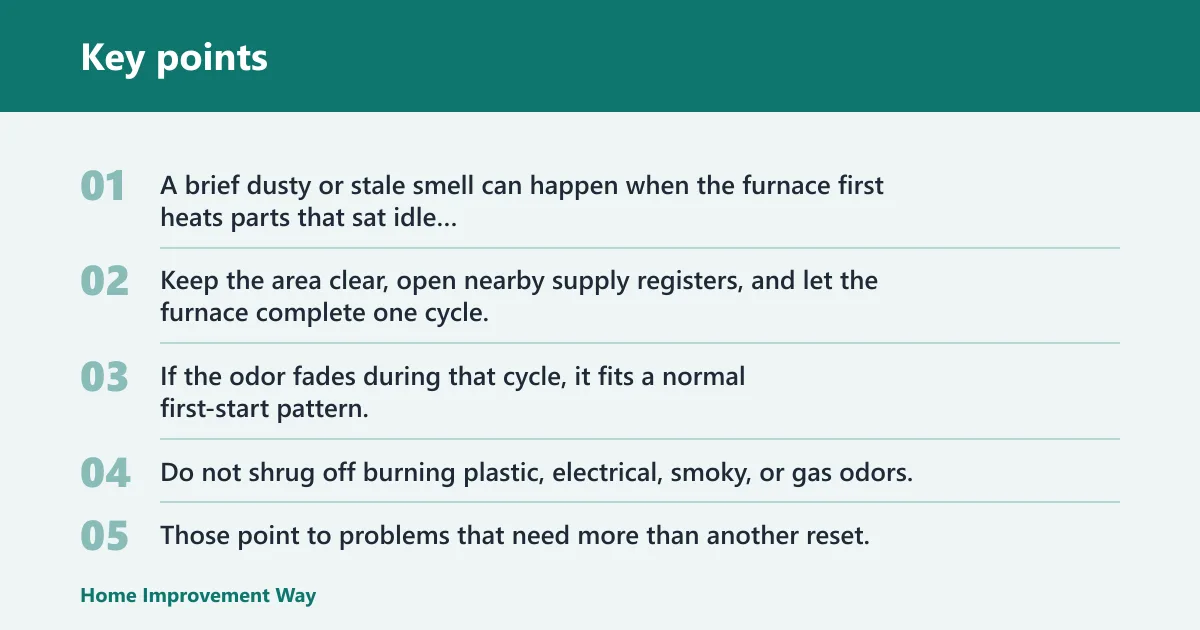
A brief dusty or stale smell can happen when the furnace first heats parts that sat idle all summer. Keep the area clear, open nearby supply registers, and let the furnace complete one cycle. If the odor fades during that cycle, it fits a normal first-start pattern.
When odor is not normal
Do not shrug off burning plastic, electrical, smoky, or gas odors. Those point to problems that need more than another reset, especially if the smell is stronger on the second attempt. A furnace that smells wrong and shuts down should not be treated as a nuisance start-up issue.
What to do before resetting again
Turn the system off, check the thermostat setting, confirm the filter is not blocked, and make sure the door panel is seated. If the smell is gas, leave the area, avoid switches, flames, and phones in the home, and call the gas utility or emergency services from outside. If the smell is not gas but still seems abnormal, stop after one safe check and schedule service.
When should you stop restarting it?
Stop restarting the furnace when the symptom points to gas, combustion, or a safety shutdown. One careful attempt is reasonable after basic checks, but repeated resets can worsen a fault or hide a dangerous condition. If the unit locks out, fails ignition after its normal attempts, or smells like gas, stop and call for service.
Gas odor
Any gas odor means stop. Do not keep cycling the thermostat, and do not wait for another try to “see what happens.” If the furnace smelled like gas even once, treat it as a fuel-supply or ignition problem until a technician confirms otherwise.
Repeated ignition failure
A furnace that clicks but will not light often points to spark ignition failure or another ignition problem. That is not a homeowner repair. If ignition keeps failing after the furnace completes its normal attempt sequence, the safer move is to stop and call for service.
Burner rollout or shutdown
Rollout, soot, or sudden shutdown after ignition are safety warnings. These symptoms can point to burner problems, venting trouble, or heat exchanger concerns. Do not keep trying to restart the furnace if the cabinet or surrounding area shows signs of abnormal combustion.
Lockout after multiple tries
Lockout is the furnace telling you it has seen enough failed attempts. A second or third reset will not fix a dirty flame sensor, weak igniter, blocked venting, or another control fault. At that point, the safer choice is service, not another restart.
Picture a furnace that clicks, tries to light, and then shuts off three times in a row. The first check is simple: confirm heat mode, power, gas valve position, and the door panel. If those are fine, the next step is service, not a fourth reset.
How do I know if my furnace filter is causing startup problems?
A clogged filter can cause weak airflow, hotter-than-normal operation, and a high-limit shutdown. If the furnace starts, runs briefly, and then quits, the filter belongs near the top of the suspect list. If it looks visibly loaded with dust, replace it before another heat call.
Restricted airflow signs
Look for weak supply airflow, long run times before the house warms, and a furnace that shuts off early. Those symptoms often show up after a long idle season when the filter is loaded with dust. A severely restricted filter can make the furnace trip its own safety device.
How a clogged filter triggers shutdown
When airflow drops too low, heat can build up inside the furnace cabinet. The high-limit switch is designed to shut the furnace down in that condition. That shutdown protects the equipment, but it also means the real fix may be as simple as restoring airflow before another start.
What to change before another attempt
Replace the filter, clear any blocked return grille, and make sure supply registers are open. Then try one more call for heat. If the furnace still short cycles or blows cool air, the problem is likely beyond the filter and should be checked by a technician.
Suppose a 20-by-25 filter looks gray and dust-loaded. Swap it before the next startup. If the furnace then runs normally, the filter was the likely cause. If it still shuts down, keep the furnace off and move to service.
What a technician should inspect during seasonal startup
A technician should handle the parts that involve ignition, combustion, venting, and safety testing. That includes the igniter, flame sensor, gas pressure, burners, venting, condensate components on high-efficiency units, and safety devices. Combustion analysis and carbon monoxide checks belong in safe startup, not guesswork.
Igniter and flame sensor
The igniter and flame sensor are common causes of click/no flame and lights-then-dies symptoms. A technician can check flame signal, clean or replace a sensor, and confirm whether the igniter is heating or sparking as designed. These parts are often behind repeated startup failures.
Condensate drain and float switch
High-efficiency furnaces need the condensate trap, lines, and safety switch inspected. A clog can trip a float switch and shut the furnace down before it heats the house. Water near the cabinet is not a normal first-day surprise, and it should not be ignored.
Heat exchanger and burners
The heat exchanger should be inspected by a technician because visual checks alone cannot reliably rule out cracks or corrosion. Burners should show an even flame pattern without lifting or yellow tipping. Those checks are not safe homeowner tasks if they require opening panels or defeating the door switch.
Combustion safety and carbon monoxide
Carbon monoxide safety requires combustion analysis and checking for CO in the living space. A startup visit should verify venting and combustion air for flue integrity and draft, then confirm safety devices like limit switches and rollout switches under load. That is the right place to catch a problem before it becomes a heating failure.
Should you run it before the freeze?
Yes. Running the furnace before the first freeze gives you time to catch a clogged filter, failed igniter, condensate clog, or weak thermostat response while you still have time to schedule service. A first-day failure is stressful; a pre-freeze check gives you room to fix the problem before cold weather makes it urgent.
Why early startup helps
An early heat call tells you whether the system still responds after months of inactivity. It also lets you identify harmless startup odor versus a true fault. If the furnace fails now, you are not waiting for the first hard freeze to discover a no-heat problem.
What to confirm before colder weather
Confirm thermostat response, filter condition, gas valve position, door fit, and whether the furnace completes one clean startup cycle. On high-efficiency models, look for condensate drainage problems or water near the cabinet. If any of those checks fail, arrange service before temperatures drop further.
When to schedule service now
Schedule service now if the furnace has repeated lockouts, ignition trouble, a dirty flame sensor symptom, water near the unit, or any combustion warning. Also schedule service if the first cold-day startup leaves you uncertain about airflow or safety. Waiting only increases the chance of a no-heat night.
Frequently asked questions
What should I check before turning on my furnace for the first time this season?
Check the thermostat, breaker, furnace switch, gas valve position, door panel fit, filter condition, and whether supply registers and return grilles are open. If the furnace is high-efficiency, also look for water near the condensate area. Then watch one heat cycle and stop if the furnace shows a warning sign.
Why does my furnace smell weird after sitting all summer?
A dusty smell can happen on the first startup because dust burns off warm parts. That odor should fade during the first cycle. A gas smell, smoky odor, or sharp electrical smell is not normal and means you should stop the furnace and call for help.
What if my furnace starts and then shuts off right away?
That pattern often points to a dirty flame sensor, failed igniter, clogged filter, or another safety trip. Check the filter and door panel once, but do not keep resetting the furnace. If it shuts off again after one careful restart, service is the safer next step.
When is it unsafe to keep trying to restart a furnace?
Stop immediately if you smell gas, see soot, suspect burner rollout, or hear the furnace lock out after repeated tries. Also stop if ignition fails more than once. Those symptoms can involve fuel, combustion, or safety devices, and they need a technician rather than another reset.
What furnace parts should a technician inspect during seasonal startup?
A technician should inspect the igniter, flame sensor, burners, heat exchanger, venting, condensate parts on high-efficiency units, and safety devices. They should also verify gas pressure, airflow, and carbon monoxide safety. Those checks go beyond a safe homeowner startup and belong in service work.
Sponsored / affiliate links. As an Amazon Associate I earn from qualifying purchases. I may earn additional commission from eligible campaigns.