Which Direction Should a Ceiling Fan Spin in Winter?
Set a reversible ceiling fan to spin clockwise at low speed in winter only if it moves warm air near the ceiling back down without creating a draft; otherwise, leave it off. Wrong settings can leave rooms stratified, make you feel colder, and push up heating use. This guide shows how to tell whether clockwise circulation helps in each room, and when a fireplace, furnace, or space heater is the better choice.
Clockwise rotation and low speed for winter air circulation
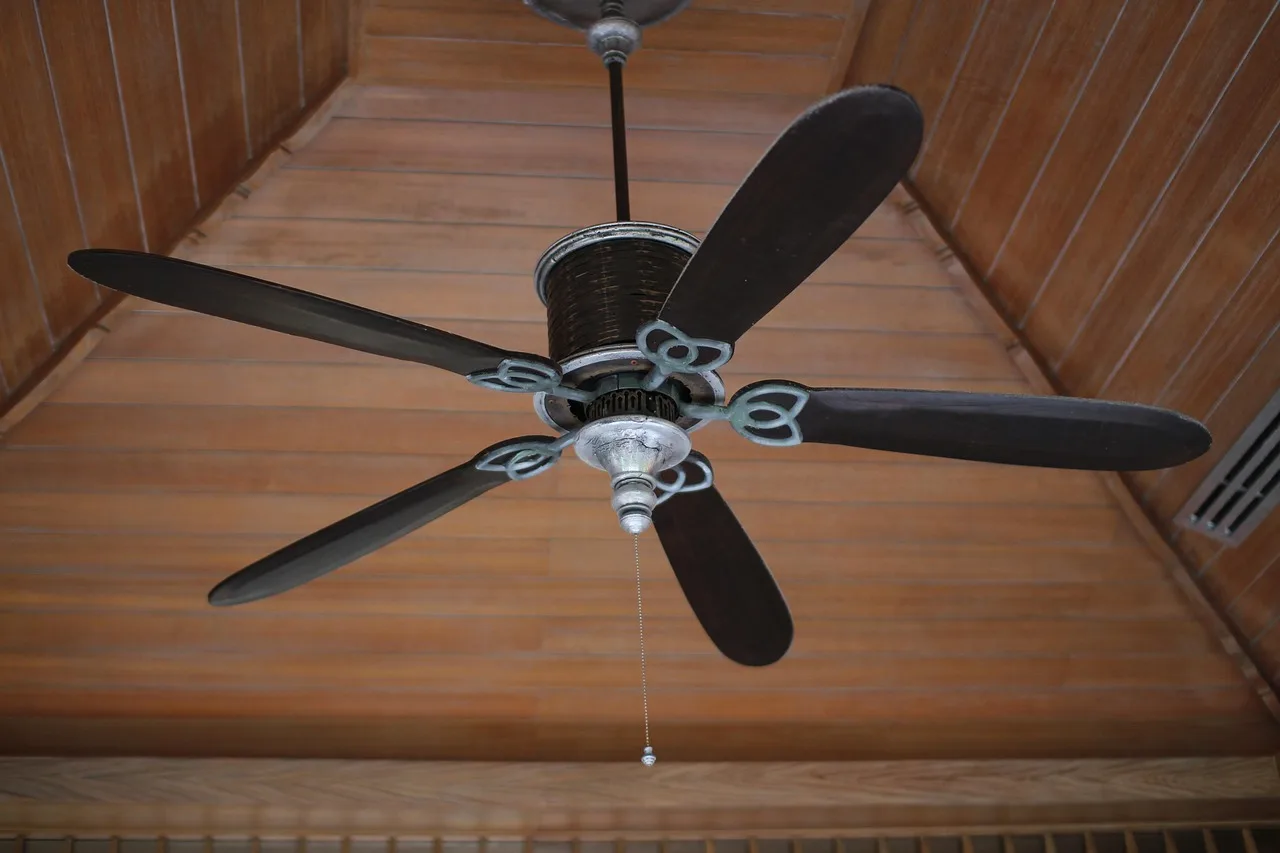


In winter, a reversible ceiling fan should usually spin clockwise when viewed from below, and it should run at low speed. That setting is meant to circulate warmer air that pools near the ceiling back into the occupied area without creating a noticeable breeze, which is why the speed matters as much as the direction. Energy Star notes that reverse rotation can help redistribute heated air, while low speed keeps comfort from turning into a draft problem.
Why low speed matters in winter
Winter circulation should be gentle. If the fan runs too fast, the moving air can feel cooler on skin even when the room temperature has not changed. Low speed lets the fan mix air without turning comfort into a draft issue, which is especially important in bedrooms, seating areas, and rooms where people stay still for long periods.
How can I tell if a ceiling fan is clockwise from the floor?
From the floor, the simplest check is to watch the blade path and confirm that the blade tips move from left to right as they pass the far side of the room, which indicates clockwise rotation when viewed from below. The comfort test matters too: if the fan is on low and the room feels even without a draft, the setting is probably correct.
What to watch for visually
Stand directly under the fan and look at the blade movement rather than the hub. The fan should appear to push air upward at the outer edges of the blades. If the movement looks opposite, the direction is wrong for winter use. A quick floor-level check is useful because blade markings and remote settings are not always obvious after a seasonal change.
How comfort confirms the direction
If the direction is right, you should notice less temperature layering and no strong breeze. If you feel moving air on your skin, the setting is probably too fast, the room is too small, or the fan is a poor fit for that space. In winter, comfort is the real test because a ceiling fan does not heat air; it only redistributes it.
Does running a ceiling fan help in winter?
Yes, but only in the right room and only when the fan is set to gently remix air. Warm air naturally rises, so ceilings often hold more heat than the occupied zone below. Energy Star and extension-style guidance both describe ceiling-fan reverse mode as a way to improve comfort by moving collected warm air back down, especially in rooms with higher ceilings or open layouts.
Why warm air builds up
Warm air tends to collect near the ceiling because heated air is less dense and rises. That creates stratification, where the top of the room is warmer than the space people actually use. A fan can reduce that layering by blending the ceiling air with the lower room air, which can make the room feel more even without adding heat.
When the benefit is small
In a room with a low ceiling and strong HVAC mixing, the gain may be minor. If the temperature is already fairly even from floor to ceiling, the fan may not change comfort enough to matter. In those spaces, the best choice is often to leave it off rather than run it just because it is winter.
Should a ceiling fan run on low speed in winter?
Yes, low speed is the right starting point because winter circulation should be subtle. The goal is to move warmer ceiling air without creating a wind-chill effect at the places people sit or sleep. If a fan needs medium or high speed to change comfort, the room is usually a poor candidate for winter fan use.
Why gentle airflow works better
Fast-moving air can make skin feel cooler even when the thermostat has not changed. Low speed reduces that problem while still allowing air mixing. Energy Star’s winter guidance emphasizes using the reverse setting at a low speed so the fan improves comfort without becoming a draft source.
When a higher speed is the wrong fix
If the room feels colder when the fan speeds up, that is a sign the fan is doing too much and mixing in a way that is uncomfortable. A ceiling fan is not meant to compete with the heating system. If low speed does not improve comfort, turning the fan off is the better answer.
How do I reverse a ceiling fan safely?
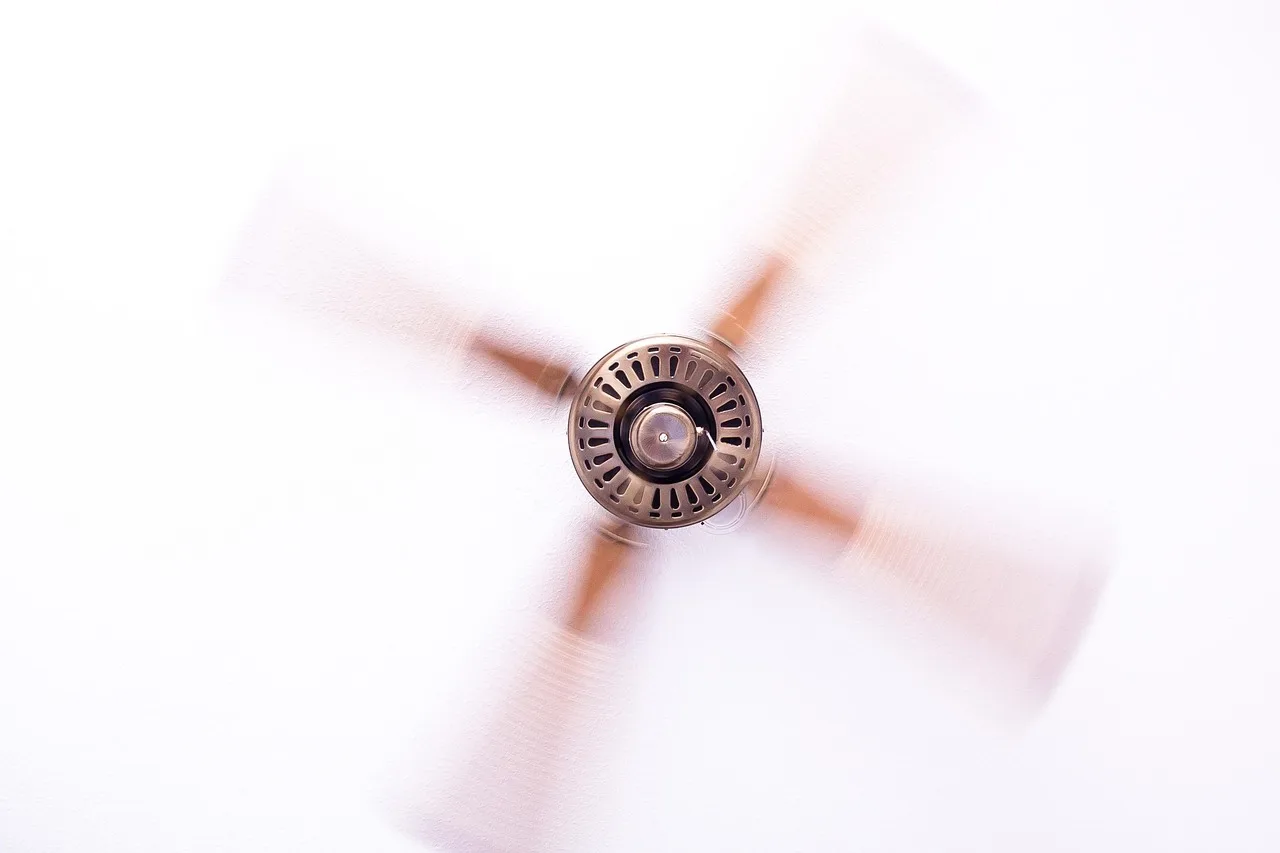
Turn the fan off before changing direction, and wait for the blades to stop. Then use the model’s reverse control, which may be a switch, remote, wall control, or app setting. Manufacturer manuals commonly require the fan to be fully stopped before reversing, and that instruction matters for both safety and control.
- Switch the fan off.
- Wait until the blades fully stop.
- Use the physical reverse switch, remote, wall control, or app control, depending on the model.
- Set the speed to low.
- Check from the floor that the room feels comfortable, not drafty.
Use the control your fan actually has
Most reversible fans have a switch or chain on the motor housing. Some models reverse by remote, wall control, or app. Because control layouts vary by brand and model, the manual is the most reliable source for the exact reverse procedure. If the fan has a labeled winter or reverse mode, use that rather than guessing.
Blade pitch affects the result
Blade angle matters for direction-based airflow. Two fans can both be reversible and still perform differently in winter because blade pitch, blade size, and motor design affect how much air they move. If one fan feels right on low and another feels too drafty, that difference is often model-dependent rather than a problem with the season setting itself.
What if there is no reverse switch?
First check the remote, wall control, or app settings, because many modern fans hide reversal there instead of on the motor housing. If that fails, look for a small switch on the motor housing or consult the model manual for the exact control location. If the fan is non-reversible or the control is inaccessible, leave it off rather than forcing a seasonal rule.
Some fans use a remote button, a wall controller, or an app menu instead of a visible slide switch. Others keep the reverse control on top of the motor housing, where it may not be obvious from the floor. Manufacturer documentation is the safest way to confirm whether reversal is supported and where the control is located.
When not to force it
If the model is not designed to reverse, or if the switch is too hard to reach safely, do not improvise. A fan that cannot be reversed cleanly is not a winter-use candidate just because the room is cold. In that case, the safer and more practical choice is to leave the fan off and use another heating strategy.
When does a ceiling fan save energy in winter?
A ceiling fan can support savings if it helps you feel comfortable at a slightly lower thermostat setting, but the savings are not automatic. DOE-style comfort guidance generally treats circulation as a comfort tool, not a heat source. The biggest gains are most likely in rooms where warm air collects near the ceiling and the occupied zone stays cooler.
Why savings are indirect
The fan itself does not create heat. It can only redistribute the heat already in the room, so the potential benefit comes from improved comfort rather than new energy production. If that comfort lets you reduce thermostat demand a little, heating use may drop. If not, the fan does not meaningfully change winter energy use.
What limits the payoff
Savings are limited in small rooms, drafty rooms, and spaces where the heating system already keeps temperatures even. In those cases, the fan may simply add electricity use without improving comfort. The more stratification a room has, the more likely the fan is to provide a useful winter benefit.
Do high ceilings make a difference?
Yes. High ceilings usually increase the chance that warm air collects above head level, so a fan has more useful work to do. Reliable building and extension-style guidance on stratification notes that temperature differences grow as ceiling height increases, which makes reverse fan circulation more helpful in vaulted spaces and open rooms.
Why tall rooms change the result
High-ceiling rooms often benefit more because the gap between ceiling temperature and floor temperature is usually greater. The larger the room volume and the higher the ceiling, the more likely warm air sits out of reach. In those settings, a reversible fan on low can help move some of that heat back toward the living area.
Where the setting matters most
Great rooms, vaulted living rooms, and open-plan spaces are the classic winter use cases. In a compact room, there may be too little layered air for the fan to matter much. In a tall room, the difference can be noticeable because the fan has more vertical space to remix the air.
Ceiling fan winter checklist
Use this checklist to decide whether clockwise low speed is worth using in a specific room. If the answer in the last column is yes, leave the fan off instead.
| Room type | Expected benefit | Use clockwise low speed? | Turn it off instead? |
|---|---|---|---|
| Small bedroom | Usually limited. Air may already be mixed well enough. | Only if the room feels warmer near the ceiling and still comfortable at floor level. | Yes, if any breeze feels cold or distracting. |
| High-ceiling living room | Often better. Warm air stratification is usually stronger. | Yes, if low speed evens out the room without a draft. | Yes, if the room is already evenly warm. |
| Room with a fireplace | Can help spread warmed air away from the fireplace zone. | Sometimes, but only if it does not pull smoke, ash, or heat into an uncomfortable pattern. | Yes, if the room feels uneven or the fireplace already dominates the heat pattern. |
| Room with a space heater | Often limited because the heat source is localized. | Only if the fan helps mix the heater’s warmed air without blowing directly on occupants. | Yes, if the heater already warms the occupied area or the fan adds draft. |
| Drafty space | Usually low. Incoming cold air can cancel the benefit. | Rarely. | Yes, if the fan adds to the chill or fights room drafts. |
Which rooms benefit most from winter fan use?
The best winter candidates are rooms where warm air collects overhead but people spend time in a lower occupied zone. High ceilings, open layouts, and rooms with uneven heat distribution usually benefit more than small, tightly sealed spaces. If a fan does not improve comfort at low speed, the room is not a good match.
Small bedrooms
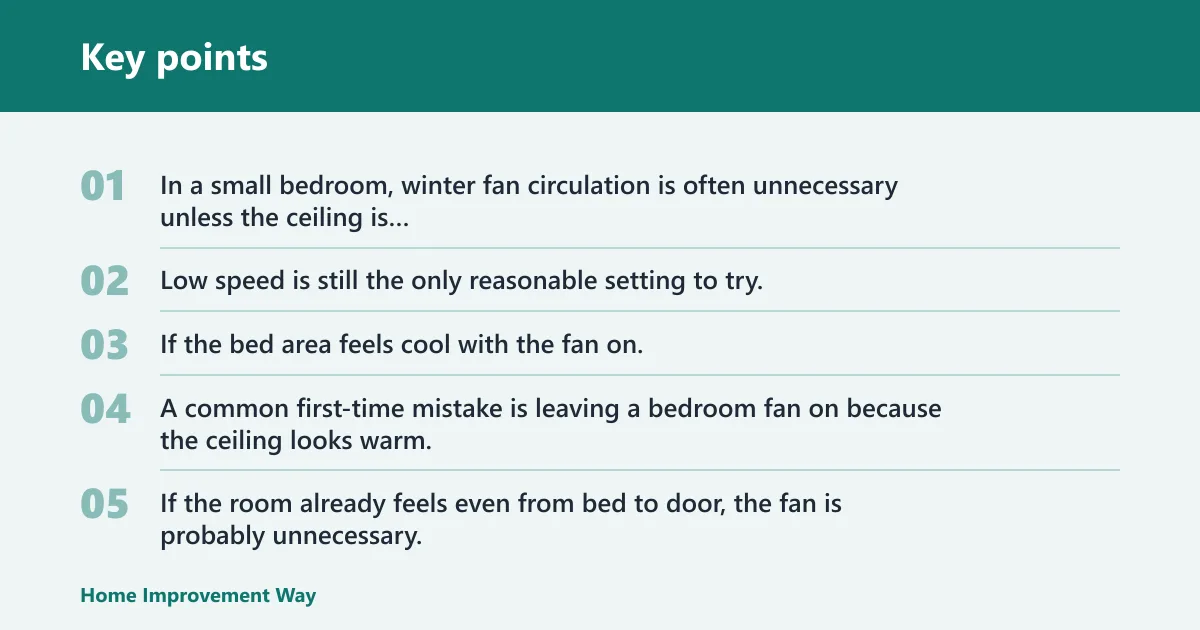
In a small bedroom, winter fan circulation is often unnecessary unless the ceiling is high or heat collects overhead. Low speed is still the only reasonable setting to try. If the bed area feels cool with the fan on, switch it off and keep the thermostat strategy focused on the room’s actual use.
A common first-time mistake is leaving a bedroom fan on because the ceiling looks warm. That is not enough reason by itself. If the room already feels even from bed to door, the fan is probably unnecessary.
High-ceiling living rooms
High-ceiling rooms are often the clearest winter use case. The greater the height, the more likely warm air collects above head level. In that setting, clockwise low speed can help move warmer air back down and make the room feel more balanced.
Suppose a living room has a vaulted ceiling and the thermostat is on one wall near eye level. If the top of the room feels warmer but the seating area feels cool, a reversible fan on low may improve comfort without much extra noise or motion.
Rooms with fireplaces or space heaters
Be careful around localized heat sources. A fireplace or space heater usually warms a specific area, while a ceiling fan affects the whole room. That can help in some layouts, but it can also spread heat in a way that does not match how the room is used.
With a fireplace, the better setting may be off if the room is already comfortable or if the fan disrupts the heat pattern. With a space heater, running the fan may make sense only when it helps blend warmer air into the occupied zone without adding a noticeable breeze. Space heaters also need clearances and stable placement, so safety comes first.
Drafty spaces
Drafty rooms are poor candidates for winter fan use. If cold air leaks around windows, doors, or vents, a ceiling fan usually cannot fix the problem. It may even make the room feel worse by moving air across cold surfaces and people.
In that case, sealing drafts or adjusting the heat source usually matters more than fan direction. Leave the fan off unless it clearly improves comfort.
What are the signs the fan setting is wrong?
The wrong winter setting usually shows up as draft, colder skin feel, or no improvement in room balance. If the fan makes people feel chilled, increases movement in papers or curtains, or seems to fight the heating system, it is not helping. In winter, the fan should improve comfort quietly or stay off.
Common wrong-setting symptoms
If the room feels colder after the fan starts, the speed is probably too high or the room is too small. If the air feels dry and moving, the fan may be creating more sensation than comfort. Those are all signs that the fan should be turned off rather than left running on the assumption that winter use always helps.
What to do if comfort gets worse
Turn the fan off. A fan can make a room feel colder because moving air increases heat loss from skin and clothing. If comfort drops instead of improving, there is no winter benefit to keep it running. The right call is to stop using the fan and rely on better temperature control, draft sealing, or a more appropriate heating source.
How should I decide whether to use a ceiling fan in winter?
Start with the room, not the rule. If the space has ceiling-level warmth, a reversible fan, and enough volume to avoid a draft, clockwise low speed may help. If the room is small, drafty, or already evenly heated, the fan should usually stay off. Comfort at floor level is the deciding factor.
Simple decision rule
Use the fan only when it improves comfort without creating a breeze. That means clockwise, low speed, and a room that actually needs temperature mixing. If any of those conditions are missing, the winter setting is unlikely to be useful enough to justify running the fan.
Sources
- Energy Star: ceiling fan reverse mode and low-speed winter comfort guidance.
- U.S. Department of Energy consumer guidance on ceiling fans and winter circulation.
- Manufacturer manuals for reversible ceiling fan models describing reverse-switch procedures and safe direction changes.
- Building and extension-style guidance on indoor air stratification and the effect of ceiling height on temperature layering.
Sponsored / affiliate links. As an Amazon Associate I earn from qualifying purchases. I may earn additional commission from eligible campaigns.
 Faryuan Bladeless Heater Fan, 25inch Heating & Cooling & Filter Combo Tower Fan 80° Oscillating with Remote, 9H Timer, 8 Speeds, Portable Quiet for Indoor, Bedroom, Home Office Room, White&Sliver
 Antarctic Star Tower Fan Portable Floor Fans 85°Oscillating Fan Quiet Cooling 12H Timer Remote Control Standing Bladeless Electric 3 Wind Speeds 4 Modes Bedroom Office,36 inch, Black+White