Who Invented The Radiator For Residential Homes? Full Story
The invention of the radiator for residential homes is a story with multiple contributors, but Count Rumford is often credited with early foundational work, while Franz San Galli developed the first practical cast-iron radiator design in the 1850s, marking a key step in modern home heating systems.
The Genesis of Home Heating
Heating our homes has been a challenge for centuries. Early methods used open fires. These were smoky and dangerous.
They also didn’t heat rooms evenly. Imagine a cold corner while the fire blazed. That was the norm for many.
People needed a safer, more consistent way to stay warm. This led to ideas about circulating heat. The goal was to spread warmth throughout a house.
This was a big leap in comfort and safety. It also helped prevent drafts. The air felt more still and pleasant.
Early Visions: Count Rumford’s Influence
Count Rumford was an American scientist. He lived in the late 1700s and early 1800s. He was very interested in heat.
He studied how heat moved. He also looked at how to save fuel.
Rumford came up with some smart ideas. He designed a new kind of fireplace. It was much more efficient.
It sent less smoke into the room. It also sent more heat into the space. He understood how air moved around heat.
He even thought about heating water. He wanted to use hot water to warm rooms. This was a very advanced idea for his time.
His work laid important groundwork. It showed that heating could be improved. It wasn’t just about a fire.
It was about systems.
Rumford’s Key Ideas
Focus on Airflow: He realized that how air moves matters a lot. He made fireplaces that guided air better.
Heat Distribution: He thought about spreading heat around a room. Not just in one spot.
Water as a Medium: He experimented with using hot water. This was a big step towards radiators.
His work was more theoretical. It inspired others. They would take these ideas further.
They would build on his understanding of heat. This is how many inventions happen. One person has an idea.
Another person makes it real.
The Dawn of the Radiator: Franz San Galli
Fast forward to the mid-1800s. This is when things really started to change. A Russian inventor named Franz San Galli is a key figure.
He is often called the inventor of the radiator. He was born in Prussia but worked in Russia.
San Galli lived in St. Petersburg. It’s a very cold city.
He needed good ways to heat his home and factory. He looked at existing heating methods. He saw their problems.
They were often messy or inefficient.
He wanted something better. He thought about hot water. He imagined using pipes to move hot water.
He envisioned a device that would release heat from this hot water. This device would sit in a room. It would warm the air around it.
In the 1850s, San Galli created something called a “gutta-percha heater.” This was an early form of a radiator. It used hot water. It was made of cast iron.
Cast iron is great at holding heat. It also lasts a long time.
His design was simple but effective. It had sections. This allowed for more surface area.
More surface area means more heat can escape into the room. It was a clever way to maximize warmth. This was a big deal for people in cold climates.
San Galli’s invention wasn’t just a concept. He patented it. This means he got legal rights to his design.
He started making them. People began to see the value in his work. His “gutta-percha heater” was the start of something big.
My Own Close Call with Old Heating
I remember visiting my grandparents’ old farmhouse years ago. It was a beautiful place. But the heating was… an adventure.
They had these massive, old cast-iron radiators. They looked like sculptures, really.
One winter afternoon, I was reading in the living room. The wind was howling outside. I felt a strange dripping sound.
Then, a small puddle started to grow under one of the radiators. My heart did a little jump. I had heard stories about old radiator leaks.
I rushed to find my grandpa. He came in, sighed a bit, and grabbed some old towels. He explained that these old radiators could be tricky.
Sometimes they’d get a little crack. Or a connection would loosen up.
He showed me how to turn off the valve. It was a big, clunky metal wheel. He then used a special wrench to tighten something.
It felt like we were performing surgery on a giant metal beast. The dripping stopped.
That day, I really appreciated the ingenuity behind these machines. And I also understood why people wanted newer, more reliable systems. It was a moment where the history of heating felt very real and present.
A little bit of panic, a lot of learning.
San Galli’s Radiator: Quick Facts
Material: Primarily cast iron.
Heating Medium: Hot water.
Key Feature: Sectional design for increased heat output.
Impact: Paved the way for widespread central heating.
The Spread of Central Heating
San Galli’s invention didn’t just stay in Russia. The idea of using hot water to heat homes caught on. Other inventors and companies started to develop their own versions.
This was the beginning of central heating.
Instead of having many small fires in different rooms, you could have one boiler. This boiler would heat water. Then, pipes would carry that hot water to radiators.
These radiators would then warm the entire house. This was a huge step up in convenience.
The development of radiators went hand-in-hand with boilers. Boilers got better at heating water. Pipes became more reliable.
This whole system worked together. It transformed how people lived, especially in colder parts of the world.
Imagine living through a harsh winter before radiators. You’d have to constantly tend fires. Your house would be drafty.
Some rooms might be freezing. Radiators offered a steady, comfortable warmth. It made homes more livable and enjoyable during winter months.
The cast-iron radiators became very common. They were durable. They held heat well.
You still see them in older buildings today. They are a testament to the solid engineering of that era. They are also quite heavy!
Beyond San Galli: Other Key Figures
While San Galli is widely recognized, other people also contributed to radiator technology. In America, inventors like Joseph Nason were working on steam heating. Steam heating is another way to use radiators.
Joseph Nason patented a steam radiator in 1841. This was even before San Galli’s widely adopted water radiator. Nason’s work was important for developing steam heating systems.
Steam provides very quick heat. But it can also be harder to control than hot water.
The technology evolved rapidly. Different types of radiators emerged. There were tall, slender ones.
There were short, squat ones. Some were decorative. Others were purely functional.
The design of radiators also changed over time. Early ones were very basic. Later designs became more ornate.
They were often painted to match the room’s decor. Some even had intricate carvings. They became a part of the home’s interior design.
The concept of a “central heating system” became a reality. This system involved a furnace or boiler, pipes, and the radiators themselves. It was a complex piece of engineering for its time.
It required skilled plumbers and installers.
The growth of cities and the industrial revolution played a big role. More people lived closer together. There was a greater need for efficient heating.
Factories also needed to be heated. This demand fueled innovation. It pushed inventors to create better solutions.
Radiator Evolution Snapshot
Early Concepts: Count Rumford (1700s-1800s) – explored hot water heating.
First Practical Design: Franz San Galli (1850s) – cast-iron water radiator.
Steam Heating: Joseph Nason (1840s) – developed steam radiators.
Mass Production: Late 1800s – radiators became widely available.
Modern Era: Development of more efficient boilers and compact radiator designs.
The Science Behind the Warmth
How does a radiator actually work? It’s all about heat transfer. The boiler heats water.
This hot water travels through pipes. These pipes lead to the radiator.
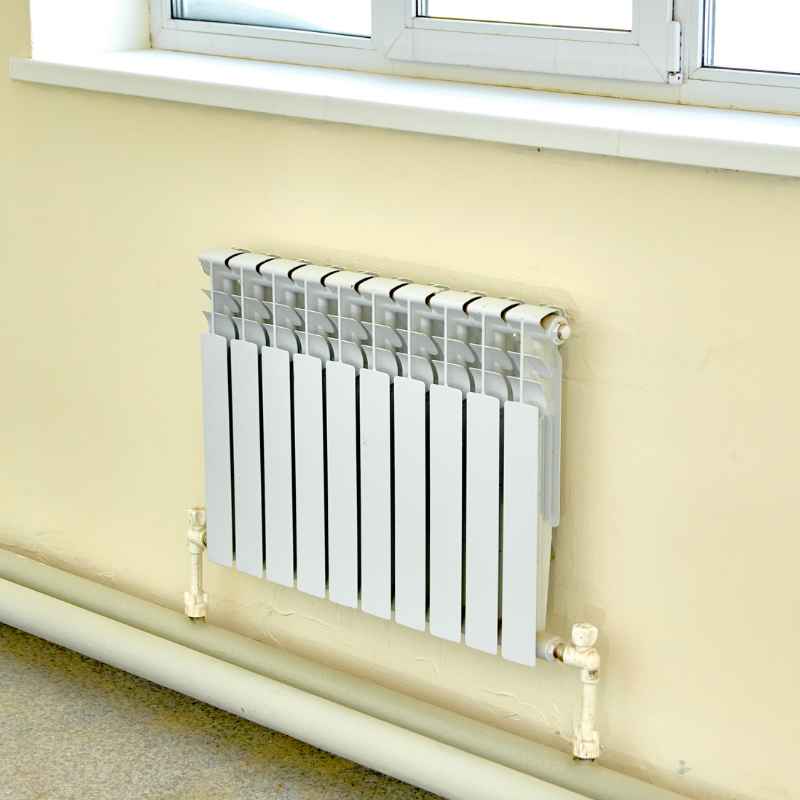
The radiator is designed with a large surface area. This is where the magic happens. The hot water flows through the radiator’s fins or sections.
The metal of the radiator gets hot. It then heats the air that touches it.
This warm air rises. It starts to circulate around the room. Cooler air then moves towards the radiator to get heated.
This creates a natural cycle of air movement. This is called convection. It’s how heat spreads evenly.
Some radiators also give off heat through radiation. This is like the heat you feel from a campfire. It travels in waves.
It directly warms objects and people in the room. This gives a very cozy feeling.
The temperature of the water in the pipes is controlled. This is done by the boiler. It ensures the radiators don’t get too hot or too cold.
Early systems were less precise. But they still worked based on these principles.
The materials used are important. Cast iron is dense. It holds a lot of heat.
It releases it slowly. Steel is also used. It heats up faster.
It’s often lighter than cast iron.
The design of the radiator itself matters. More surface area means more heat can be given off. That’s why radiators often have fins or a ribbed structure.
This increases the area that touches the air. It makes them more efficient.
It’s a beautiful interplay of physics. Hot water provides the energy. The radiator acts as a converter.
It turns that water’s heat into warm air for your room. And it does this quietly and reliably, most of the time.
Radiators in American Homes
In the United States, the adoption of radiators for home heating followed a similar path. Early American homes relied on fireplaces and wood stoves. These were common throughout the 18th and early 19th centuries.
As cities grew and wealth increased, the desire for more comfort rose. Inventors and entrepreneurs saw the potential. They started introducing steam and hot water heating systems.
These systems often featured cast-iron radiators.
By the late 1800s and early 1900s, radiators were becoming a standard feature in many new homes. Especially in the Northeast and Midwest, where winters are harsh. Homes built during this “Victorian” and “Edwardian” era often have beautiful old radiators.
The rise of companies like Burnham Boiler Corporation and American Radiator Company helped popularize the technology. They manufactured and marketed these heating systems. They made them more accessible to homeowners.
The concept of a “central heating plant” for a home was revolutionary. It meant no more hauling wood or coal for multiple stoves. It meant more consistent temperatures throughout the house.
It meant fewer fires and less smoke.
However, these early systems were not without their challenges. Leaks could occur. They required regular maintenance.
The boilers needed careful operation. But the overall benefit of consistent, controllable heat was undeniable.
The design of American radiators also varied. Some were very simple and utilitarian. Others were more decorative.
They became a part of the architectural style of homes. They were often painted white or black.
The development of more efficient boilers and improved plumbing techniques continued to refine radiator systems. This made them more reliable and cost-effective for heating American residences. It was a slow but steady transformation of home comfort.
Radiators in U.S. Homes: A Timeline
Pre-1850s: Fireplaces, wood stoves, and coal stoves were common.
Mid-1800s: Early steam and hot water systems introduced, often with imported or early American radiators.
Late 1800s – Early 1900s: Widespread adoption in new construction. Radiators become a standard feature.
Mid-1900s: Continued use, but new technologies like forced-air furnaces start gaining traction.
Present Day: Old radiators are cherished for their character, while modern, more efficient heating systems are prevalent.
The Decline and Revival of Old Radiators
For much of the 20th century, radiators were the standard for heating many homes. But then, newer technologies emerged. Forced-air heating systems became very popular.
These use furnaces and ductwork.
Forced-air systems offered a key advantage: they could also provide air conditioning. This was a big draw for homeowners. They also often seemed quicker to heat a house.
And installation could sometimes be simpler in new builds.
As a result, many older homes had their radiators removed. They were replaced by ductwork and vents. It was seen as a modernization upgrade.
The radiators were sometimes discarded.
However, over time, people started to notice what was lost. Old cast-iron radiators have a unique charm. They provide a different kind of heat.
It’s often described as a softer, more even warmth. It doesn’t dry out the air as much as some forced-air systems.
There has been a bit of a revival. Many homeowners now cherish their old radiators. They see them as historical features.
They are willing to maintain them. They appreciate their durability and classic style.
Restoration companies now specialize in fixing up old radiators. They can repair leaks. They can repaint them.
They can even reconfigure them to work with modern heating systems. This allows people to enjoy the best of both worlds.
The aesthetic appeal is also a factor. A beautifully restored cast-iron radiator can be a focal point in a room. It adds character and history.
It’s a piece of functional art.
While new homes rarely feature traditional radiators, the legacy of the invention is clear. It changed home living. It made warmth accessible.
It set the stage for all the heating systems we use today. It’s a foundational technology.
When is a Radiator a Concern?
Most of the time, radiators are reliable. But like any system, they can have issues. Knowing what to look for is important.
It helps you address small problems before they become big ones.
Leaking: This is the most common concern. Leaks can happen at the valves, pipes, or even within the radiator body. A small drip might be fixable.
A large leak needs immediate attention. Check for rust spots too, as they can lead to leaks.
Noisy Operation: Radiators can make noises. Gurgling sounds often mean there’s air trapped inside. This air prevents hot water from filling the radiator completely.
This is called “bleeding” the radiator. You use a special key to let the air out.
Uneven Heating: If one radiator is cold or lukewarm, while others are hot, there’s an issue. This could be air in the system. Or it could be a problem with the valve.
Sometimes sediment can build up inside, blocking flow.
Corrosion: Over time, radiators can rust. Especially if they are older or have been exposed to moisture. Visible rust is a sign of wear.
It can weaken the metal. It might lead to leaks eventually.
Strange Smells: While rare, a burning smell could indicate something is wrong. Perhaps dust has built up on the radiator and is burning off. Or it could signal a deeper issue with the heating system.
Always investigate odd smells.
It’s worth noting that modern radiators are very different. They are often made of thinner steel. They are more efficient.
But the fundamental principle of using heated water or steam remains the same.
If you have older radiators, regular checks are a good idea. Look for any signs of wear or damage. Listen for unusual noises.
And don’t hesitate to call a professional if you’re unsure.
Quick Radiator Health Check
Look: Check for leaks, rust, or visible damage.
Listen: Are there strange noises like gurgling or banging?
Feel: Does the radiator heat up evenly across its surface?
Smell: Is there any unusual odor when the heat is on?
Act: Address small issues quickly. Call a pro for anything serious.
The Lasting Impact of the Radiator
The invention of the radiator for residential homes was more than just a new gadget. It was a transformation. It changed how we live indoors.
It allowed people to live more comfortably in colder climates.
It brought a consistent, controllable heat into homes. This was a luxury for many. It improved health by reducing dampness.
It made homes more pleasant places to be during winter. Families could gather and live together without being cold.
The journey from Count Rumford’s early ideas to Franz San Galli’s practical design is a story of human ingenuity. It shows how dedicated individuals can solve real-world problems. They make life better for countless others.
Even though new heating technologies exist, the radiator’s legacy is undeniable. It paved the way. It proved that central heating was possible.
It showed the power of circulating heat through water or steam. It’s a core part of the history of modern living.
So, the next time you feel that gentle warmth from a radiator, or even a modern baseboard heater, take a moment. Think about the inventors. Think about the journey from smoky fires to the comfort we enjoy today.
It’s a fascinating story.
Frequently Asked Questions About Home Radiators
Who is most credited with inventing the radiator?
Franz San Galli is widely credited with inventing the first practical cast-iron radiator design in the 1850s. He developed a sectional radiator that used hot water, which became a foundational element for central heating systems.
Were there earlier forms of radiators before San Galli?
Yes, Count Rumford explored concepts of heating rooms with hot water in the late 18th and early 19th centuries, laying theoretical groundwork. Joseph Nason also patented a steam radiator in 1841, preceding San Galli’s widely adopted water radiator.
How did early radiators heat a home?
Early radiators worked by circulating hot water or steam from a central boiler through pipes to the radiators placed in rooms. The radiators, typically made of cast iron, would then release heat into the room through convection and radiation, warming the air.
What were the advantages of early radiators over older heating methods?
Radiators offered more consistent and controllable heat than open fires or stoves. They reduced smoke and drafts, improved air quality, and allowed for a more even temperature distribution throughout the house. This led to significantly increased home comfort.
Why did radiators fall out of favor in some newer homes?
Forced-air heating systems, which use furnaces and ductwork, became popular because they could also provide air conditioning. These systems were often perceived as quicker to heat a home and could be simpler to install in new construction, leading to radiators being replaced.
Are old cast-iron radiators still effective today?
Yes, old cast-iron radiators can be very effective and durable. They provide a distinct type of heat often described as soft and consistent. Many homeowners choose to maintain or restore them for their aesthetic appeal and heating quality.
What is the main issue with old radiators?
The most common issues with old radiators are leaks, which can occur due to rust or damage. Noisy operation (like gurgling) due to trapped air is also frequent. Regular maintenance, like bleeding air, is key to their proper function.
Final Thoughts on Home Heating Innovation
The story of the radiator is a testament to how simple needs drive complex solutions. From basic survival to modern comfort, heating has come a long way. The radiator was a pivotal step.
It brought warmth and life into homes.
Sponsored / affiliate links. As an Amazon Associate I earn from qualifying purchases. I may earn additional commission from eligible campaigns.