Can a Toilet Freeze and Crack?
Yes. If water freezes in the bowl, tank, supply line, or drain line, a toilet can crack. Any visible split, bulge, or leak means stop using it and shut off the water. Leaving it alone can turn thawing into a flood, a hidden leak, or a broken fixture. This guide shows how to identify the freeze point and choose the safest thaw or prevention step.
How freezing water damages toilets
Yes. Water freezes at 32°F, but toilet-freeze risk is often closer to 20°F or lower when a bathroom, wall cavity, or crawl space stays cold long enough. When water turns to ice, it expands and can crack porcelain or split a pipe wall. A frozen toilet should stay out of service until you know what part froze.
What freezing water does to porcelain and pipe walls
Porcelain can crack when ice expands inside a bowl or trapped pocket. One reason this can happen is that vitreous china may contain tiny trapped bubbles, and frozen water can push against them. Pipes can fail the same way. Ice pressure rises inside the supply line, trapway, or drain line until the weakest point gives way.
That failure can be obvious or hidden. A hairline crack in the bowl may seep only after thawing. A supply line may split behind a wall and leak into the cavity. A drain line may stay blocked and leave the toilet unusable even if the bowl itself looks normal.
Why a frozen toilet should stay out of service
Do not flush a frozen toilet. Flushing can force water against an ice blockage, which raises the chance of cracking porcelain, bursting a line, or sending meltwater into a leak path. If the toilet is hard to flush after a hard freeze, treat it as frozen until you identify where the blockage sits.
Picture a second-floor bathroom with a toilet against an exterior wall. The bowl holds a little water, but the room feels cold and the tank sounds empty. That setup often points to a frozen supply line or drain line, not a simple bowl problem, so the safe move is to stop flushing and check the exposed plumbing first.
Diagnose the frozen part
Start by matching the symptom to the part that likely froze: bowl, tank, supply line, or drain line. That split matters because each part fails differently and needs a different response. A visible ice problem in the bowl is not the same as a refill problem in the supply line.
Bowl symptoms and what they mean
If the water level in the bowl has dropped, frozen solid, or looks slushy, the bowl or trapway may be frozen. A bowl freeze is more likely when the room is cold and the water in the bowl drops below freezing. The toilet generally should not be flushed until the bowl water has thawed and the porcelain appears free of cracks.
Tank symptoms and what they mean
If the bowl is normal but the tank has ice, surface frost, or little or no refill water, the tank may have frozen. This is more common in unheated spaces and seasonal homes. Hidden water can remain in valve assemblies, fill tubes, or other small parts inside the tank even when the visible water seems gone.
Supply line symptoms and what they mean
If the bowl still has water but the tank will not refill after a flush, the supply line may be frozen or burst. Supply lines often run through exterior walls, crawl spaces, basements, garages, or other cold areas. Plumbing inside exterior walls is more likely to freeze on cold, frigid days.
Drain line symptoms and what they mean
If the toilet will not flush, drains slowly, or backs up even though the tank refills, the drain line may be frozen. That problem can leave the toilet unusable until the blockage thaws or a damaged pipe is repaired. If the drain line is hidden or inaccessible, do not force water through it.
Toilet freeze response table
| Likely freeze point | Likely symptoms | Safe DIY thaw method | What not to do | Can the toilet still be used? | When to call a plumber |
|---|---|---|---|---|---|
| Bowl | Ice or slush in the bowl, low water level, visible frost nearby | Warm the room, then use a hair dryer on low heat from a safe distance or pour warm water slowly if the bowl is accessible | Do not flush, and do not use boiling water | No, not until fully thawed and inspected for cracks | Call if the porcelain cracks, leaks, or the freeze point is not visible |
| Tank | Tank will not refill, tank sounds hollow, frost on the tank or valve area | Warm the bathroom, then use gentle heat on the outside of the tank or nearby visible pipe; keep heat low and moving | Do not pry, chip ice, or pour boiling water into the tank | Usually no until refilling returns and no crack is present | Call if the tank splits, leaks, or hidden valve parts seem frozen or broken |
| Supply line | Tank will not refill after flushing, pipe feels very cold, no water reaches the tank | Warm the room and expose the pipe to gentle heat, such as a hair dryer or monitored heat tape if already installed correctly | Do not leave a space heater unattended or use an open flame | No if the line is frozen; yes only after water flow returns and there is no leak | Call if the pipe bursts, the line is hidden in a wall, or thawing does not restore flow |
| Drain line | Toilet will not flush properly, water rises and drains slowly, repeated blockage after thawing attempts | Only if the line is visible and accessible, apply warm water carefully; otherwise wait for a plumber | Do not force repeated flushes or pour harsh chemicals down the drain | No until the drain line is clear and the toilet flushes normally | Call if the line is inaccessible, burst, or still blocked after safe warming |
How do you unfreeze a frozen toilet?
Use gentle heat, not force. The safest approach depends on where the ice sits. For visible bowl water or an exposed pipe, warm the area slowly. For a hidden line or anything that may have burst, stop and call a plumber. A frozen toilet is not a problem to rush.
Safe thaw methods for visible bowl water
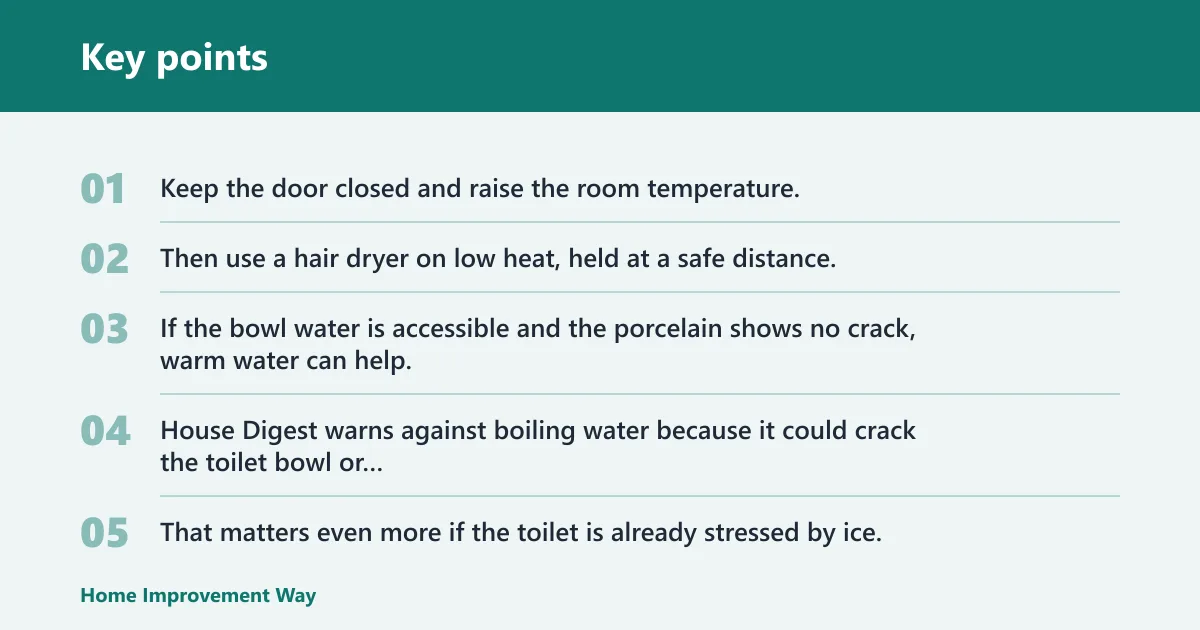
Warm the bathroom first if you can. Keep the door closed and raise the room temperature. Then use a hair dryer on low heat, held at a safe distance, to warm the bowl area gradually. If the bowl water is accessible and the porcelain shows no crack, warm water can help, but never use boiling water.
House Digest warns against boiling water because it could crack the toilet bowl or damage PVC pipes. That matters even more if the toilet is already stressed by ice. If the bowl warms unevenly or you hear cracking sounds, stop immediately.
Safe thaw methods for a tank or exposed pipe
For a tank or exposed supply line, warm the room and direct gentle heat at the outside of the cold section. A space heater can help in a small bathroom, but it should never be left unattended because it poses a fire risk. If heat tape is already installed on the pipe, follow the product’s instructions and monitor it closely.
House Digest says setting the thermostat to 75 to 80 degrees Fahrenheit for a few hours can help thaw inaccessible supply lines. Another common recommendation is to keep the home thermostat at least 55°F in cold weather to maintain a safer ambient temperature. Those steps do not fix a burst line, but they can help if the pipe is still intact.
What not to do during thawing
Do not chip ice, jab into the bowl, or force a flush. Do not pour boiling water into porcelain or onto plastic parts. Do not assume the visible water is the full problem; a tank can hide frozen water in valve assemblies, and a toilet may still crack after the visible ice starts melting.
A common first-timer mistake is warming only the bowl while the supply line stays frozen inside a cold exterior wall. The bowl may look normal again, but the toilet still will not refill. That means the freeze point was farther upstream, and the line needs more careful warming or a plumber’s help.
How can you keep a toilet from freezing overnight?
Keep the indoor heat on, close bathroom doors, and protect exposed plumbing before the temperature drops. The goal is to keep the bowl, tank, supply line, and drain line above freezing long enough to make it through the night. In occupied homes, that often starts with room heat and pipe insulation.
Keep indoor heat on and doors closed
Leave the thermostat on, even if you lower it slightly at night. A cold bathroom with an open door can cool fast, especially if the toilet sits near an exterior wall. If a pipe runs through a crawl space or garage, the room heat alone may not be enough, but it still helps slow heat loss.
Protect exposed pipes with foam insulation or heat tape
Wrap exposed pipes with foam pipe insulation and tape or an insulation wrap to hold it in place. This is useful for pipes near toilets in basements, crawl spaces, and garages. Heat tape can also help prevent freezing, and some heating cables begin warming pipes as temperatures drop. Both need proper installation and monitoring.
Use a space heater only with supervision
A space heater can help warm a small bathroom or an accessible pipe area, but it should not run unattended. Keep it clear of towels, rugs, and cabinets. If you only need a short burst of heat near a visible pipe, this can help thaw the area, but it is not a substitute for fixing the cold spot.
What should you do in a seasonal home?
In an unoccupied or seasonal home, use nontoxic RV antifreeze in the toilet traps or tank as directed, then drain or flush it when service resumes. Do not use household chemicals as stand-ins. Seasonal homes need a different plan because empty spaces cool faster and hidden water can still freeze.
Using nontoxic RV antifreeze correctly
Realtor.com says nontoxic RV antifreeze can be added to toilets and traps in unoccupied or seasonal homes. Use only a product labeled non-toxic for RV or plumbing use, and follow the directions on the container. Add it only where the instructions allow, then remove or flush it out when normal use starts again.
Winterizing the tank, trap, and supply line
Seasonal homes should have the tank, trap, and exposed supply line winterized before hard freezes arrive. Cottage Life notes that even with antifreeze, leftover water in the valve assembly can still freeze and damage a toilet. That means draining the system matters, not just adding liquid to one part of it.
For a cabin that sits empty all week, a practical plan is to shut off the water, drain the toilet as directed for that fixture, protect exposed piping with insulation, and set a minimum heat level if the home has power. If water service cannot be safely restored without leaving hidden water behind, a plumber should handle the winterization.
Restart steps when service resumes
When you return to the home, flush or drain the antifreeze according to the product directions before normal use. Check the bowl, tank, and supply line for cracks, leaks, or odd sounds while the system refills. If the toilet hesitates, drips, or smells like a leak after restart, stop and inspect it before regular use.
Suppose a cabin toilet is left with RV antifreeze in the trap over a cold weekend. On return, the water supply is turned back on and the tank refills normally, but a small drip appears at the supply connection. That drip matters. It means the line or fitting may have cracked and needs repair before the toilet goes back into full service.
Frequently asked questions
Can a toilet freeze and crack?
Yes. Water in the bowl, tank, supply line, or drain line can freeze in extreme cold, and expanding ice can crack porcelain or split piping. The toilet should stay out of service until you know which part froze and whether the fixture is intact.
Can a toilet pipe freeze?
Yes. Toilet supply and drain pipes can freeze, especially in exterior walls, crawl spaces, basements, garages, or other unheated areas. A frozen pipe may block refill water or stop flushing entirely. If the pipe is hidden or burst, call a plumber instead of forcing a thaw.
How do I unfreeze the water in a toilet?
Warm the bathroom and thaw the visible bowl or tank water slowly. A hair dryer on low heat can help if the area is reachable, and warm water may be used only when the porcelain is intact and the spot is accessible. If the freeze is hidden, wait for a plumber.
Will toilet bowl cleaner freeze?
Toilet bowl cleaner can freeze if it is water-based and kept in an unheated space, but the bigger issue is the toilet itself. Do not assume cleaner in the bowl will prevent freezing or make thawing safer. Keep the room warm and treat the bowl, tank, and pipes as separate parts.
How can I prevent toilet pipes from freezing?
Insulate exposed pipe with foam pipe insulation, keep the room heated, and seal drafts near exterior walls, crawl spaces, or garages. Heat tape can also help when installed correctly and monitored. In seasonal homes, winterize the toilet system and use only nontoxic RV antifreeze where directed.
How does a toilet crack in winter?
Winter cracks happen when water inside the bowl, tank, valve parts, or pipe freezes and expands. The ice presses against porcelain or pipe walls until a weak point opens. A crack may show right away, or it may appear after thawing when water starts moving again.
What should I do if my toilet is hard to flush after a hard freeze?
Stop flushing and inspect the bowl, tank, and visible supply line. A hard flush after a freeze can mean the drain line is blocked or the supply line is frozen. If the toilet still resists after gentle room heat and visible thawing, call a plumber before trying again.
Sponsored / affiliate links. As an Amazon Associate I earn from qualifying purchases. I may earn additional commission from eligible campaigns.