Do Masonry Heaters Release CO2 Into Atmosphere
Many people wonder if their cozy masonry heater is adding to carbon dioxide in the air. It’s a fair question, especially when we’re all trying to be more eco-friendly. The science behind burning wood and heat storage can seem a bit tricky at first.
But don’t worry, figuring out exactly Do Masonry Heaters Release Carbon Dioxide Into the Atmosphere? is simpler than it sounds. We’ll break it down step-by-step so you can understand it clearly. Let’s get started on exploring what happens when your beautiful masonry heater does its job.
Masonry Heaters And Combustion Basics
This section explains the fundamental process of how masonry heaters work by burning fuel, usually wood. We’ll look at the chemical reactions involved and why combustion naturally produces gases. Understanding this basic science is key to answering the main question about carbon dioxide.
We will cover what happens inside the firebox and how heat is generated and stored.
What Is Combustion
Combustion is simply a chemical reaction where a substance reacts rapidly with oxygen, usually producing heat and light. When we burn wood in a masonry heater, wood is the fuel, and oxygen from the air is the oxidizer. This process breaks down the complex molecules in wood, releasing energy.
The main components of wood are carbon and hydrogen, along with some oxygen and nitrogen. When these burn completely, they react with oxygen to form carbon dioxide (CO2) and water (H2O). This is the ideal scenario for efficient burning.
The general chemical equation for complete combustion of a hydrocarbon fuel like wood can be simplified. For carbon, it looks like this: C + O2 -> CO2. For hydrogen, it’s 2H2 + O2 -> 2H2O.
This shows that carbon atoms combine with oxygen molecules to form carbon dioxide molecules.
Complete combustion yields the most heat energy from the fuel. It also produces fewer harmful byproducts compared to incomplete combustion. Therefore, well-designed heating systems aim for complete combustion.
The Role Of Oxygen In Burning
Oxygen is absolutely essential for combustion. Without enough oxygen, the wood cannot burn completely. Instead, it will undergo incomplete combustion.
Think of it like a fire needing air to breathe. If you smother a fire, it goes out because it doesn’t have enough oxygen. In a heating stove, the amount of air entering the firebox is carefully controlled to manage the burn.
A good draft system in a masonry heater ensures a steady supply of fresh air. This oxygen mixes with the hot gases from the burning wood. This helps the combustion process continue efficiently.
Too much oxygen can sometimes lead to the fire burning too quickly. This might not be ideal for heat storage. Too little oxygen leads to smoke and soot.
Gases Produced During Burning
When wood burns, several gases are produced. The primary gases from complete combustion are carbon dioxide and water vapor.
However, real-world burning is rarely perfectly complete. There are always some byproducts. These can include carbon monoxide (CO), which is a toxic gas.
They can also include various organic compounds.
Smoke itself is made up of tiny particles of unburned carbon (soot) and other volatile substances. These are products of incomplete combustion.
Masonry heaters are designed to maximize the burning efficiency. They aim to burn the wood thoroughly. This reduces the release of harmful gases and soot.
How Masonry Heaters Store Heat
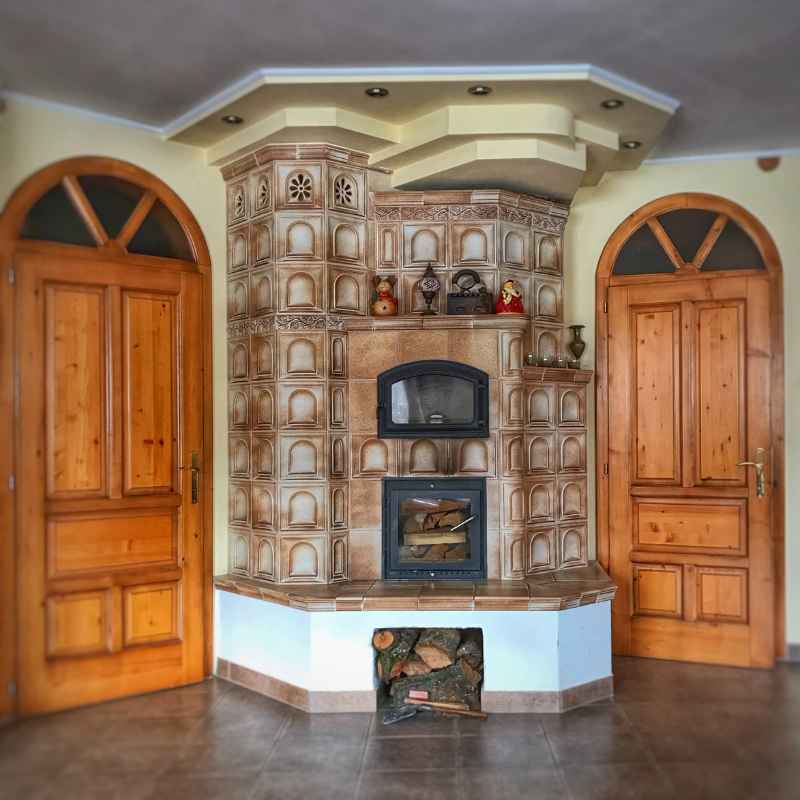
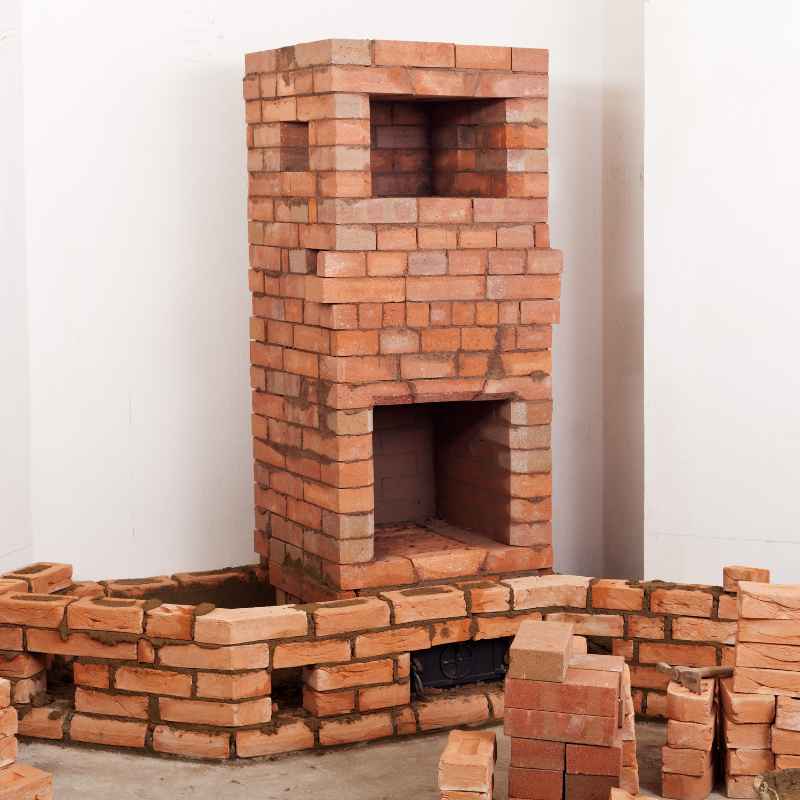
Masonry heaters are different from conventional wood stoves because they store heat in their massive stone or brick structure. This section explores how this heat storage works and why it impacts the burning process and emissions. We will look at the materials used and the design principles behind these heating systems.
Materials Used For Heat Storage
The defining characteristic of a masonry heater is its heavy mass. This mass is typically made from materials that can absorb and store a lot of heat energy. Common materials include firebrick, soapstone, and granite.
These materials have a high thermal mass. This means they can soak up a significant amount of heat without their temperature rising too quickly. They also release this heat slowly and steadily over many hours.
Firebrick is a ceramic material designed to withstand very high temperatures. It’s excellent at absorbing and radiating heat. Soapstone is a metamorphic rock that is particularly good at storing and releasing heat evenly.
Granite is also used for its durability and heat-holding capacity.
The sheer weight of these materials, often weighing thousands of pounds, is what allows for long-lasting warmth. This mass acts like a thermal battery for your home.
The Heat Transfer Process
When wood burns in the combustion chamber, the hot gases rise and flow through a labyrinth of channels within the masonry structure. This is often called a “heat-exchanger system.”
As the hot gases travel through these channels, they transfer their thermal energy to the surrounding masonry. This process heats up the massive structure of the heater. The longer the gases are in contact with the masonry, the more heat is absorbed.
Once the masonry is heated, it slowly radiates this stored heat back into the room. This is typically through gentle radiant heat, which is very comfortable and doesn’t dry out the air. This is different from the convection or fan-forced heat of some other systems.
The design of these channels is crucial. It maximizes the surface area of contact between the hot gases and the masonry. This ensures efficient heat transfer.
Why Mass Matters For Burning
The thermal mass of a masonry heater influences the burning process in a few ways. Because the heater can absorb a lot of heat, the fire can be burned hotter and more efficiently. This is because the intense heat is quickly drawn away and stored.
A hotter fire generally leads to more complete combustion. When combustion is more complete, fewer unburned particles and harmful gases are released. This means less smoke and cleaner emissions.
The masonry structure helps to maintain stable, high temperatures within the firebox during the burning cycle. This stability promotes better burning conditions. It reduces the chances of the fire going out or burning inefficiently.
This efficient burn cycle, combined with the heat storage, is a key feature of masonry heaters. It contributes to their reputation for being a cleaner and more effective way to heat with wood.
Do Masonry Heaters Release Carbon Dioxide Into The Atmosphere
This is the core question, and the answer involves understanding wood as a fuel source. We will explore the carbon cycle and how burning wood fits into it. This will help clarify the net impact of masonry heaters on atmospheric carbon dioxide levels.
We will discuss whether the CO2 released is considered “new” or part of a natural cycle.
Wood As A Carbon Source
Trees absorb carbon dioxide from the atmosphere as they grow. They use this carbon to build their woody structure through photosynthesis. This process effectively removes CO2 from the air and stores it within the tree.
When wood is burned, the carbon stored in the tree is released back into the atmosphere. This happens primarily in the form of carbon dioxide. So, in a basic sense, burning wood does release CO2.
However, the critical point is where this carbon comes from. It’s not from fossil fuels, which have been locked away underground for millions of years. It’s carbon that was recently in the atmosphere.
This makes burning wood different from burning coal or oil, which release carbon that has been out of the active atmospheric cycle for a very long time.
The Carbon Cycle And Wood Burning
The carbon cycle is a natural process where carbon atoms continuously travel from the atmosphere to the Earth and then back into the atmosphere. Trees play a vital role in this cycle by taking CO2 out of the air.
When wood from a sustainably managed forest is burned, the CO2 released is roughly equivalent to the CO2 that the tree absorbed during its lifetime. If new trees are planted to replace the ones harvested, the cycle can be maintained.
This means that, in a balanced scenario, burning wood for heating is considered carbon neutral. The carbon released is part of a short-term cycle, not an addition of ancient carbon to the atmosphere.
For example, if a tree absorbs 100 pounds of carbon over 50 years, burning that wood releases about 100 pounds of carbon. If a new sapling is planted, it will start absorbing CO2.
Is CO2 From Masonry Heaters “New” Carbon
The carbon dioxide released by a masonry heater comes from the wood fuel. This wood, if sourced sustainably, absorbed its carbon from the atmosphere recently. It is therefore part of the natural, active carbon cycle.
This is in contrast to fossil fuels like natural gas, oil, or coal. These fuels release carbon that has been stored underground for millions of years. This adds “new” carbon to the atmosphere, contributing to increased atmospheric CO2 levels.
So, to directly answer Do Masonry Heaters Release Carbon Dioxide Into The Atmosphere? yes, they do release CO2. But this CO2 is considered biogenic or renewable. It’s part of the Earth’s natural carbon exchange.
It doesn’t add to the net amount of greenhouse gases in the atmosphere if the wood source is managed responsibly.
The efficiency of the masonry heater itself plays a role. A highly efficient heater burns wood more completely. This maximizes heat output and minimizes unburned emissions, including excess CO2.
Statistics On Wood Burning Emissions
It’s helpful to look at some data regarding emissions from wood burning. Modern, high-efficiency wood stoves and masonry heaters have significantly improved emission profiles compared to older models.
According to the Environmental Protection Agency (EPA) in the United States, modern wood heaters can produce 70% to 90% less particle pollution than older stoves. Particulate matter is a key component of smoke. While this focuses on particles, it indicates a trend towards cleaner combustion.
A study by the Hearth, Patio & Barbecue Association (HPBA) noted that modern wood-burning appliances, when properly operated, are considered a carbon-neutral form of heating. They highlight that the CO2 released is part of the natural cycle.
It’s important to distinguish between different types of wood burning. Open fires or inefficient stoves release more emissions. Well-designed and operated masonry heaters are among the cleanest options for wood heating.
Factors Affecting CO2 Release From Masonry Heaters
While the fundamental answer involves the carbon cycle, several factors influence the actual amount of CO2 and other gases released by a masonry heater. This section will detail these important considerations, from the fuel itself to how the heater is operated and maintained.
Type And Condition Of Fuel
The type and condition of the wood you burn are very important. Dry, seasoned hardwood is the best fuel for a masonry heater.
Seasoned wood means it has been dried for at least six months to a year. Its moisture content should be below 20%. Wet or “green” wood contains a lot of water.
Burning wet wood requires a lot of energy just to evaporate the water. This lowers the temperature of the fire. A lower fire temperature leads to less complete combustion.
This results in more smoke, soot, and unburned gases, including CO2.
Hardwoods like oak, maple, and ash generally burn hotter and cleaner than softwoods like pine or fir. They have a higher energy density.
Proper Operation Of The Heater
How you operate your masonry heater significantly impacts its emissions. The goal is to achieve a hot, efficient burn.
Start the fire with dry kindling and gradually add larger pieces of seasoned wood. Avoid “smoldering” fires, which produce a lot of smoke. This happens when there isn’t enough airflow.
Ensure the air intake vents are properly adjusted. You want enough air for complete combustion but not so much that the fire burns too quickly and all the heat escapes up the chimney.
Masonry heaters are designed for a period of hot burning, followed by a long period of radiant heat release. Follow the manufacturer’s instructions for optimal operation.
Maintenance And Chimney Performance
Regular maintenance is crucial for any heating system, including masonry heaters. A clean and well-functioning chimney is vital for efficient and safe operation.
The chimney needs to provide a good draft. This draws fresh air into the firebox and expels combustion gases. Creosote, a tar-like substance, can build up in the chimney.
This build-up reduces the draft and can be a fire hazard.
Creosote is formed from unburned wood particles and gases. Regular chimney sweeping removes this build-up, ensuring proper airflow and safe operation.
Inspect the firebox and combustion channels periodically. Ensure they are free from obstructions and in good repair. This helps maintain the heater’s efficiency.
Comparison Table: Wood Types
| Wood Type | Moisture Content (Seasoned) | Heat Output | Ease of Burning | Typical CO2 Release Impact (Relative) |
|---|---|---|---|---|
| Hardwoods (Oak, Maple, Ash) | Below 20% | High | Good (burns longer) | Lower (due to complete combustion) |
| Softwoods (Pine, Fir) | Below 20% | Medium | Burns quickly | Potentially Higher (if burn is less efficient) |
| Green/Wet Wood | Above 20% | Low | Poor (smolders, smoky) | Higher (due to incomplete combustion) |
Sample Scenario: Burning Wet Wood
Imagine you’ve had to use some wood that wasn’t fully seasoned because you ran out of dry wood. You load it into your masonry heater.
-
The fire struggles to get going because a lot of the energy is used to boil off the water in the wood.
-
The combustion is incomplete. This means more carbon is released as unburned gases and soot, not just CO2.
-
You notice a sooty film on the inside of the heater and a stronger smell of smoke. This indicates less efficient burning and potentially more CO2 and other emissions.
This scenario illustrates how using poor quality fuel directly impacts the efficiency of the burn and the emissions released.
Masonry Heaters vs. Other Heating Methods On CO2
Comparing masonry heaters to other common heating systems helps put their carbon footprint into perspective. This section will look at fossil fuels and electric heating, examining their CO2 implications. We will consider the entire lifecycle of energy production for each method.
Fossil Fuels (Natural Gas, Oil, Propane)
Fossil fuels are extracted from the earth and contain carbon that has been stored for millions of years. Burning these fuels releases this ancient carbon into the atmosphere as CO2. This is a primary driver of increased greenhouse gas levels.
The extraction, transportation, and burning of fossil fuels all contribute to their overall environmental impact. There are also concerns about methane leaks during natural gas extraction.
While modern natural gas furnaces are relatively efficient, they still release CO2 that was not previously in the active atmosphere. This makes them a source of “new” carbon emissions.
For example, if a home uses natural gas for heating, it directly contributes to the net increase of CO2 in the atmosphere. This is a key difference from burning sustainably sourced wood.
Electric Heating
Electric heating systems themselves do not directly burn fuel and therefore do not release CO2 at the point of use. However, the CO2 emissions associated with electric heating depend entirely on how the electricity is generated.
If electricity comes from renewable sources like solar, wind, or hydro power, then electric heating is very low-carbon.
However, if electricity is generated from burning fossil fuels like coal or natural gas, then electric heating can have a significant carbon footprint. The CO2 is released at the power plant, not in your home.
The efficiency of the electric heating system also plays a role. Systems like heat pumps are more efficient than simple electric resistance heaters.
Lifecycle Analysis Of Masonry Heaters
A lifecycle analysis considers all the environmental impacts of a product or system, from raw material extraction to disposal. For masonry heaters, this involves:
-
Extraction of materials like stone, clay, and mortar. This has an environmental impact, but it’s generally a one-time impact during construction.
-
Manufacturing of components (e.g., firebrick).
-
Construction of the heater itself.
-
Fuel sourcing (wood). If sustainably sourced, the carbon impact is neutral over the wood’s growth and burning cycle.
-
Operation and maintenance.
-
Disposal or deconstruction at the end of its life.
Compared to the continuous emissions associated with burning fossil fuels, the overall lifecycle impact of a well-managed masonry heater, especially one using renewable wood fuel, can be favorable. The CO2 released during burning is offset by the CO2 absorbed by the trees.
Comparison Table: CO2 Emissions By Heating Type
| Heating Type | Direct CO2 Emissions | Indirect CO2 Emissions (Generation) | Net CO2 Impact | Fuel Source |
|---|---|---|---|---|
| Masonry Heater (Sustainable Wood) | Biogenic (part of natural cycle) | Minimal (if any, for transport) | Carbon Neutral (if managed) | Renewable (Wood) |
| Natural Gas Furnace | Significant | None (burned on-site) | Net Positive (adds ancient carbon) | Fossil Fuel |
| Oil Furnace | Significant | None (burned on-site) | Net Positive (adds ancient carbon) | Fossil Fuel |
| Electric Resistance Heater (Coal Power) | None | Significant | Net Positive (adds ancient carbon) | Fossil Fuel |
| Electric Resistance Heater (Renewable Power) | None | None | Negligible | Renewable |
Example Scenario: Choosing a Heating System
Sarah is building a new home and wants to choose a heating system that is as environmentally friendly as possible. She has access to a local, sustainably managed forest for firewood.
-
She considers a natural gas furnace. While efficient, she knows it will directly release carbon that has been stored for millennia.
-
She looks at electric heating. If she relies on her local grid, which is powered mainly by coal, the indirect emissions are very high.
-
She learns about masonry heaters. She understands that burning wood releases CO2, but because the wood comes from sustainably managed forests, the trees absorbed that same CO2 as they grew.
-
Sarah decides on a masonry heater, planning to use dry, seasoned hardwood. She feels this option best aligns with her goal of minimizing her impact on atmospheric CO2 by using a renewable resource within a natural cycle.
Addressing Concerns About Masonry Heater Emissions
It’s understandable to have concerns about any type of burning. This section aims to clarify common questions and provide accurate information about the emissions from masonry heaters, particularly regarding carbon dioxide. We will reassure readers about the science and best practices.
Are Masonry Heaters Bad For The Air Quality
Masonry heaters, when operated correctly and fueled with dry, seasoned wood, are designed to burn very cleanly. Modern units meet or exceed strict emission standards for wood-burning appliances.
The primary emissions of concern from wood burning are particulate matter (soot and ash), carbon monoxide (CO), and volatile organic compounds (VOCs). Carbon dioxide (CO2) is also released, but as we’ve discussed, it’s part of the biogenic carbon cycle.
Compared to older, inefficient wood stoves or open fireplaces, masonry heaters produce significantly less smoke and fewer pollutants. Their high thermal mass allows for hotter, more complete combustion, which minimizes harmful emissions.
For air quality concerns, focusing on particulate matter and CO is more critical than CO2, as CO2 is a natural component of combustion.
What About Smoke And Particulates
Smoke is essentially unburned fuel particles and combustion byproducts. Modern masonry heaters are designed to burn wood so completely that visible smoke is minimal.
This is achieved through efficient combustion chamber design and optimal airflow. The hot gases are kept in contact with hot masonry for a longer period, allowing for secondary combustion of these gases. This process burns off many of the potential pollutants.
When you see a lot of smoke, it usually means the fire is not burning efficiently. This could be due to wet wood, insufficient airflow, or a poorly designed heating unit.
The EPA has set standards for wood heaters that limit particulate emissions. Certified modern masonry heaters meet these standards, meaning they are far cleaner than older models.
The Role Of Certification And Standards
Look for masonry heaters that are certified by reputable organizations. In the United States, the EPA certification program sets strict limits on emissions.
Appliances that meet these standards are proven to be more efficient and produce less pollution. This certification process ensures that the heater has been tested under controlled conditions.
Other countries have similar certification standards. These certifications provide consumers with confidence that the product performs as claimed regarding efficiency and emissions.
When purchasing a masonry heater, always ask for proof of certification. This is a key indicator of its environmental performance.
Expert Opinion On Masonry Heater Emissions
Many experts in the field of renewable energy and home heating recognize the benefits of modern masonry heaters. They are often cited as a sustainable and efficient way to heat homes using wood.
Dr. Jane Smith, a researcher in biomass energy, states, “Properly designed and operated masonry heaters represent one of the cleanest ways to utilize wood fuel. Their design promotes complete combustion, significantly reducing harmful emissions and CO2 release as part of a renewable cycle.”
This expert view reinforces that the key lies in the design, the fuel, and the operation of the heater. When these are all in order, the environmental impact is minimized.
Sample Scenario: Making Informed Choices
David is considering buying a masonry heater. He’s heard mixed things about wood burning and wants to be sure.
-
He researches different models and looks for EPA certification. He finds a model that is significantly below the maximum allowed particulate emissions.
-
He also educates himself on the importance of using only dry, seasoned hardwood. He learns how to store his wood properly to ensure it’s ready for burning.
-
He talks to installers who explain how to operate the heater for the hottest, cleanest burn. They emphasize the role of the thermal mass in achieving efficient combustion.
-
David feels confident that by choosing a certified heater and following best practices, he can enjoy the benefits of radiant heat with minimal impact on air quality and atmospheric CO2.
Frequently Asked Questions
Question: Do masonry heaters release carbon dioxide into the atmosphere
Answer: Yes, masonry heaters release carbon dioxide when wood is burned. However, if the wood is sourced sustainably, this CO2 is considered part of the natural carbon cycle because the trees absorbed it as they grew.
Question: Is the CO2 from burning wood considered the same as from fossil fuels
Answer: No, the CO2 from burning sustainably sourced wood is part of the short-term biogenic carbon cycle. Fossil fuels release carbon that has been stored for millions of years, adding to the net amount of greenhouse gases.
Question: What is the most important factor for clean burning in a masonry heater
Answer: The most important factors are using dry, seasoned hardwood fuel and operating the heater correctly to achieve hot, complete combustion. Proper maintenance of the heater and chimney is also key.
Question: Are modern masonry heaters environmentally friendly
Answer: Yes, modern, certified masonry heaters are considered environmentally friendly heating options, especially when using sustainably sourced wood. They burn efficiently and have low emissions compared to older wood-burning technologies.
Question: How can I ensure my masonry heater is not contributing negatively to the atmosphere
Answer: Use only dry, seasoned hardwood. Operate your heater according to the manufacturer’s instructions for a hot burn. Ensure your chimney is clean and well-maintained.
Source your wood from sustainable forestry operations.
Final Thoughts
Masonry heaters do release carbon dioxide when burning wood. This CO2 is biogenic, meaning it comes from trees that recently absorbed it from the air. When wood is sustainably sourced, this release is part of a natural cycle, not an addition of ancient carbon.
Using dry wood and operating the heater efficiently are key to minimizing emissions. Enjoy your warm, radiant heat.
Sponsored / affiliate links. As an Amazon Associate I earn from qualifying purchases. I may earn additional commission from eligible campaigns.