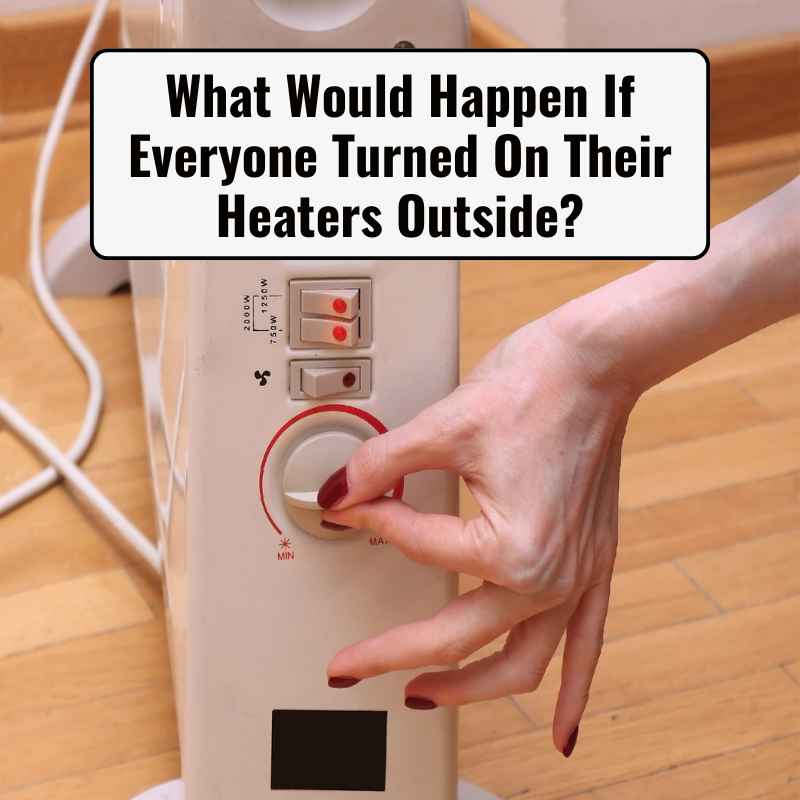
What Would Happen If Everyone Turned On Their Heaters Outside?
What would happen if everyone turned on their heaters outside is a fascinating hypothetical question that explores energy use, environmental impact, and public safety. This post examines the immediate and long-term consequences of such a scenario.
Simply put, if everyone turned on outdoor heaters simultaneously, the electrical grid would collapse within minutes, air quality would plummet, fire risks would skyrocket, and energy costs would become unsustainable.
Key Takeaways
- Turning on outdoor heaters everywhere would cause massive power outages due to grid overload.
- Widespread outdoor heating would release dangerous levels of carbon monoxide and other pollutants.
- Fire hazards from heaters near flammable objects would cause thousands of incidents per hour.
- Outdoor heaters are highly inefficient, wasting most of their energy heating the open air.
- The brief economic and social disruption would dwarf any temporary comfort gained.
The Immediate Energy Demand
Outdoor heaters typically consume 4,000 to 15,000 watts per unit, depending on the type. For comparison, a central air conditioner uses about 3,500 watts. If every household in a medium-sized city of 100,000 homes turned on one outdoor heater, the total draw would be roughly 500 to 1,500 megawatts.
That equals the output of several power plants suddenly added to the grid. Peak energy demand in the United States currently averages 740,000 megawatts. Adding a global “outdoor heater event” would push demand into uncharted territory.
- Electric resistance heaters draw 1,500 to 3,000 watts each.
- Propane or natural gas heaters avoid grid load but create other problems.
- Infrared heaters are slightly more efficient but still consume 1,200 to 2,000 watts.
- A single large city could see demand spike by 30-50% above normal.
- Rural areas would fare slightly better but still risk localized outages.
Utilities would immediately implement rolling blackouts. The North American Electric Reliability Corporation (NERC) warns that unplanned demand surges can cause cascading failures within 10 minutes. Power transformers would overheat and trip, leaving millions in darkness.
Effects on the Electrical Grid
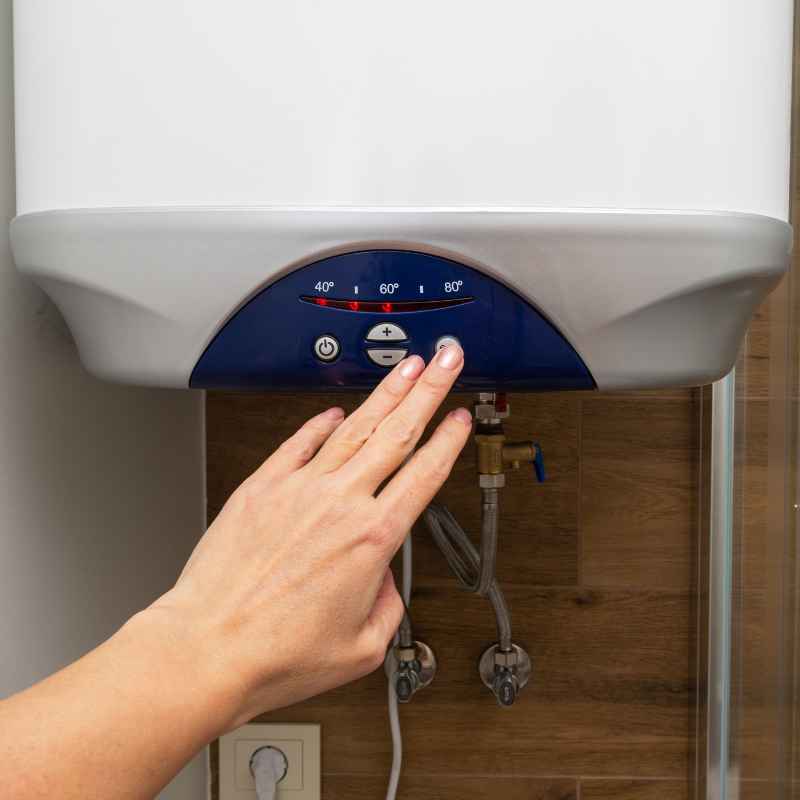
The electrical grid is designed for predictable loads. Sudden spikes from mass outdoor heater usage would overwhelm substations and transformers. Most residential circuits are rated for 100 to 200 amps; adding high-wattage heaters would blow fuses and trip breakers across entire neighborhoods.
Warning: Overloaded circuits can cause electrical fires in walls and attics. Never plug a high-wattage heater into an extension cord or daisy-chain multiple heaters.
Grid operators would shed load by deliberately cutting power to sections. This “brownout” process protects infrastructure but leaves people without power for hours. The U.S.
Department of Energy (DOE) estimates that uncontrolled grid failures cost the economy $150 billion annually. A coordinated outdoor heater event could multiply that damage.
| Heater Type | Wattage Range | Impact on Circuit |
|---|---|---|
| Electric fan heater | 1,200 – 1,800 W | Trips 15A breaker quickly |
| Infrared quartz heater | 1,500 – 2,000 W | Overloads shared circuits |
| Propane patio heater | 0 W (gas) | No grid load but polluting |
| Natural gas heater | 0 W (gas) | Gas supply strain |
Gas-powered heaters avoid grid overload but put pressure on fuel supplies. Propane reserves would deplete within days, and natural gas pipelines would struggle to meet demand.
Environmental Impact of Outdoor Heating
Outdoor heaters running everywhere would release massive amounts of carbon dioxide, carbon monoxide, and nitrogen oxides. The Environmental Protection Agency (EPA) reports that outdoor combustion devices emit 2.3 grams of CO per kilowatt-hour. With millions of units running, air quality in urban areas would degrade to hazardous levels within hours.
- Carbon monoxide poisoning cases would flood emergency rooms.
- Particulate matter (PM2.5) levels would exceed 500 µg/m³, comparable to wildfire smoke.
- Smog formation would accelerate due to volatile organic compounds (VOCs).
- Noise pollution from loud heaters would disturb sleep and wildlife.
- Heat islands in cities would intensify by 5-10°F.
Tip: If you must heat an outdoor space, use electric infrared heaters which produce zero on-site emissions. Always keep them away from open windows and vents.
Global greenhouse gas emissions would spike temporarily. Although outdoor heaters are minor compared to industrial sources, the coordinated usage would release millions of tons of CO2. The World Meteorological Organization (WMO) notes that even brief emission surges contribute to long-term warming.
Additionally, wasted heat energy dissipates into the atmosphere, offering no practical benefit.
Safety and Fire Risks
Fire departments already respond to thousands of heater-related fires each year. Multiplying outdoor heater usage by a factor of everyone would create a unprecedented fire crisis. The National Fire Protection Association (NFPA) states that heating equipment causes 48,000 home fires annually.
Outdoor heaters near dry leaves, wood decks, or clothing would ignite in seconds.
- Patio umbrellas and fabric covers are highly flammable.
- Propane tanks can rupture if overheated.
- Wind can blow heaters over, spreading flames.
- Crowded spaces with multiple heaters increase collision risks.
- Children and pets are at risk of burns from hot surfaces.
Emergency services would be overwhelmed. Burn units would fill beyond capacity, and fire engines would face gridlocked streets. The Federal Emergency Management Agency (FEMA) recommends maintaining a 3-foot clearance around any heater.
In a mass event, that rule would be impossible to enforce.
Important: Never use outdoor heaters in enclosed spaces like garages or tents. Carbon monoxide buildup can kill within minutes. Always follow manufacturer guidelines.
Economic Consequences
The immediate cost of running all outdoor heaters would be staggering. At an average U.S. electricity price of $0.14 per kilowatt-hour, a single 1,500-watt heater costs $0.21 per hour.
If 100 million households used one heater for 5 hours, the total cost would exceed $100 million per hour. That money would drain personal budgets and stress utility billing systems.
Infrastructure repair costs would follow. The American Society of Civil Engineers (ASCE) rates the U.S. energy grid as D+; a mass overload would push it into crisis.
Transformer replacements take months to build and install, leaving some areas without power for weeks. Insurance companies would likely exclude “outdoor heater events” from standard policies after such an incident.
| Impact Area | Estimated Cost per Hour |
|---|---|
| Electricity consumption | $52 million (US only) |
| Propane fuel | $38 million (20 lb tanks) |
| Natural gas | $45 million |
| Fire damage per incident | $25,000 average |
These numbers don’t include lost productivity from power outages, healthcare costs for burn and poisoning victims, or environmental remediation. The total burden would likely exceed $1 billion per hour globally.
Is Outdoor Heating Actually Efficient?
Outdoor heaters are notoriously inefficient because they heat the open air rather than people directly. Convection heaters waste up to 80% of their energy warming space that instantly mixes with cold air. Infrared models are better but still lose energy to wind and distance.
- Convection heaters warm air that blows away.
- Infrared heaters warm objects but lose intensity over distance.
- Wind speeds above 5 mph reduce effectiveness by half.
- Ceiling height (if covered) increases heat loss.
- You need to sit within 3-5 feet for noticeable warmth.
The Department of Energy recommends using zone heating indoors, not outdoors, for efficiency. In practice, the heat you feel from an outdoor heater is mostly radiative, meaning only a small fraction of input energy actually warms you. The rest dissipates into the surrounding air and ground.
What About Other Forms of Outdoor Heating?
Propane and natural gas heaters bypass grid issues but introduce fuel shortages and air pollution. According to the U.S. Energy Information Administration (EIA), propane supplies tighten quickly during cold snaps.
A mass outdoor heater event would deplete strategically stored reserves meant for rural heating and agriculture.
- Propane prices would spike 300-500% within days.
- Natural gas pipeline pressure would drop, affecting indoor heating.
- Wood-burning fire pits would release even more particulate matter.
- Electric blankets and heated clothing would be safer alternatives.
- Geothermal or solar outdoor heating is impractical for mass adoption.
Any fuel-based outdoor heating method carries inherent risks. Carbon monoxide detectors are essential, but in a mass event, false alarms and overloaded hospitals would reduce response times.
How to Heat Outdoors Safely and Efficiently
If you must heat an outdoor area, do it responsibly. Use electric infrared heaters with timers and tip-over protection. Keep them at least 3 feet from anything flammable.
For social events, consider heated blankets or portable propane heaters with safety shutoffs.
Tip: Instead of heating the whole patio, focus heat on a small area where people sit. Use windbreaks or reflective surfaces to improve efficiency.
- Use heaters only when occupied.
- Never leave heaters unattended.
- Check for gas leaks on propane models.
- Store tanks upright and away from heat.
- Keep a fire extinguisher nearby.
Local fire codes often restrict open flames and portable heaters in public spaces. Check with your municipality before a large event. With proper precautions, outdoor heating can be safe, but never at the scale of “everyone doing it.”
Frequently Asked Questions
Could the grid handle everyone using outdoor heaters at once?
No. The global electrical grid is not designed for sudden 30-50% load increases. Widespread outdoor heater usage would cause immediate brownouts and cascading failures that could last weeks.
What is the biggest danger of mass outdoor heater use?
Fire and carbon monoxide poisoning are the most immediate threats. Thousands of fires would start, and hospitals would be overwhelmed within hours. Air quality would drop to hazardous levels in urban areas.
Are gas outdoor heaters safer than electric?
Gas heaters avoid grid overload but produce carbon monoxide and consume fuel reserves. Electric heaters are safer for air quality but strain the grid. Neither is safe in a mass event scenario.
How long would it take for power to fail?
Depending on region, total grid failure could occur within 10 to 30 minutes. Transformers overheat and trip quickly under overload. Utilities would implement rolling blackouts to protect major infrastructure.
What should I do instead of using an outdoor heater?
Dress warmly in layers, use heated blankets or portable electric throw blankets, and sit in sheltered areas away from wind. Outdoor heaters are best for brief use in small, protected spaces.
Final Thoughts
Mass outdoor heater usage is a recipe for disaster. The grid would fail, air quality would suffer, and fire risks would explode. While a quick patio warmer is fine for occasional use, everyone turning on heaters outside simultaneously would cause billions in damage and significant safety hazards.
Choose safer alternatives and always prioritize efficiency and community safety.
Sponsored / affiliate links. As an Amazon Associate I earn from qualifying purchases. I may earn additional commission from eligible campaigns.