Why Is My Shower Drain Frozen in Winter?
A shower drain in winter is often not frozen. More often, the cause is a clog, a dry P-trap, or a venting problem. If you miss the real cause, you can end up with standing water, sewer odors, or a pipe that truly freezes and bursts. This guide shows how to tell the difference, what each symptom means, and the safest next step.
Why a shower drain seems frozen

A shower drain can seem frozen in winter when the real problem is a slow clog, a dry P-trap, or poor venting. True freezing is less common. It is more likely in unheated spaces, exterior walls, or a cold crawl space where drain lines cool enough to stop wastewater flow.
Cold weather changes how buildup behaves. Drains clog more often in winter because cold pipes make fats, oils, and grease harden faster, and cold incoming water makes grease solidify sooner in winter pipes. Hair, soap scum, and oils can also slow a shower drain enough to feel like a freeze-up.
Signs that point to freezing
Look for a drain that stops almost completely after a cold snap, especially if the shower sits over an unheated room or an outside wall. Standing water that refuses to drop can point to a frozen trap or branch line, but the same symptom can also come from a deep clog.
Say your basement shower works during mild weather, then backs up after a week of below-freezing nights. That pattern points more toward a cold drain line than a simple hair clog, especially if the nearby wall, joist bay, or crawl space feels very cold.
Signs that point to a clog instead
Slow draining, gurgling, and standing water after a shower often point to a shower drain clog, not a frozen line. If the drain still moves some water and gets worse after repeated use, hair, soap scum, oils, and debris are more likely than ice.
Biofilm can also contribute. It forms in damp areas with organic material like hair and skin oils, and it can add odor and drag water flow down without fully blocking the drain.
Frozen shower drain or something else?
This table helps you separate a frozen trap or branch line from a clog, a dry P-trap, or a vent issue. Start with the symptom you can see, then check whether only the shower is affected or whether other fixtures in the home are also slow.
| Symptom | Likely cause | Safe first check | Escalation step |
|---|---|---|---|
| Standing water in shower after a cold snap; no real drain movement | Frozen trap or branch line, especially in an unheated space or exterior wall | Check whether the drain line passes a cold crawl space, exterior wall, or unheated basement area | Try a safe thaw sequence; call a plumber if the pipe stays blocked |
| Slow draining, gurgling, and hair or soap buildup visible at the opening | Hair-and-soap clog | Remove visible debris and test with a small amount of warm water | Use a drain snake or plumber if the drain still backs up |
| Gurgling plus sewer odor, especially in a guest shower or rarely used bath | Dry P-trap | Run water into the shower to refill the trap | If odor stays after refilling, check for a vent or drain issue |
| Slow drain in more than one fixture, or a shower that gurgles when another drain runs | Vent issue | Note whether a nearby sink or tub also slows down | Call a plumber to inspect the plumbing vent and drain line |
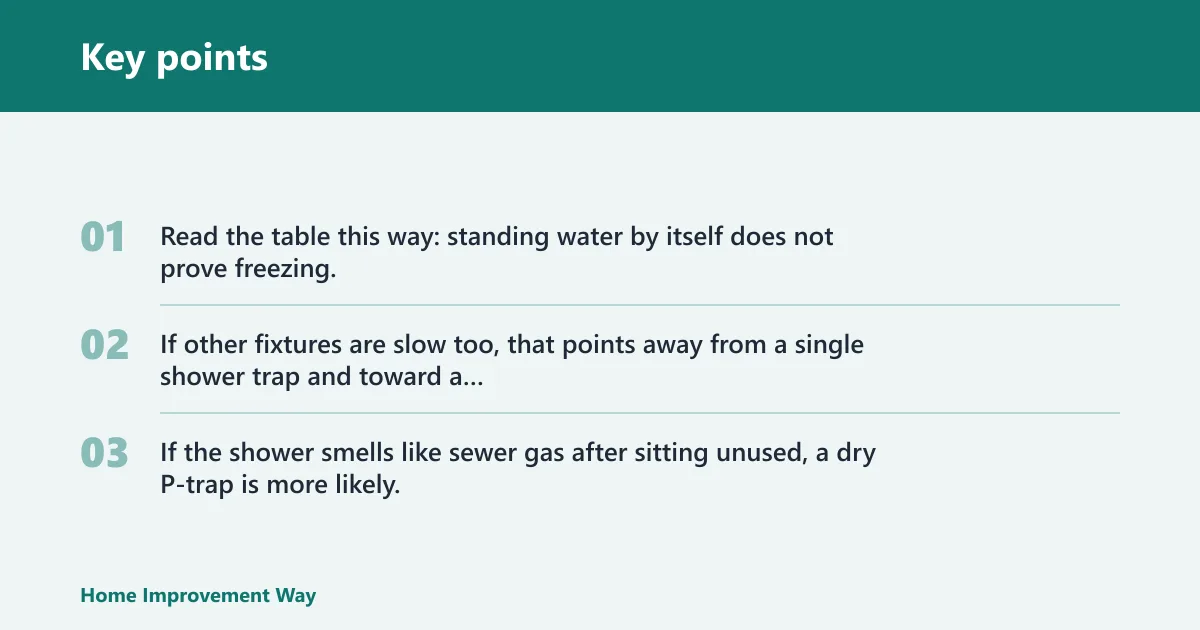
Read the table this way: standing water by itself does not prove freezing. If other fixtures are slow too, that points away from a single shower trap and toward a vent or main-line issue. If the shower smells like sewer gas after sitting unused, a dry P-trap is more likely.
What a P-trap and vent do
A P-trap is the U-shaped drainage line directly under the shower drain. Its main purpose is to hold water and block sewer gas from entering the home. If a drain is unused, the water in the trap can evaporate, and that creates an odor problem that can look like drain trouble.
Plumbing drain systems also have open vent pipes that typically extend out of the roof. The vent helps the drain breathe. If a vent clogs, a vacuum can form and pull water from a nearby P-trap, which can cause gurgling, odor, and poor drainage. (Thisoldhouse)
The sewer line carries wastewater from the home to the city main. When the vent cannot balance pressure, the drain may not move water the way it should, even if the pipe itself is not frozen or blocked solid.
What causes winter shower drain problems?
Winter does not create one single failure. A shower can slow down because buildup hardens, because a trap dried out, because a line froze in a cold space, or because a vent issue changed how the drain moves air and water. The symptom decides the fix.
Hair, soap scum, oils, and biofilm
Most shower drain clogs begin with hair and soap scum. Add body oils and other debris, and the opening narrows. Biofilm then forms in the damp residue, and that slimy layer can hold odor and make the drain feel slower than it should.
A common first-timer mistake is blaming the weather when the shower has been slowly draining for weeks. In that case, winter may have made the clog more obvious, but the blockage was already building.
Dry traps in guest showers and rarely used baths
Guest showers, basement bathrooms, and other rarely used baths can lose the water in the P-trap. That dry trap lets sewer gas into the room and can sound like a drain problem, even when no ice is present. This is one of the easiest winter look-alikes to check.
Frozen trap or branch line in cold spaces
Frozen drain line problems are more likely in unheated spaces or exterior walls. They can restrict wastewater flow in the trap or the branch line leading to the sewer line, and that is different from a frozen water supply pipe, which affects the water coming into the shower, not the drain leaving it.
Vent problems that mimic a blockage
A vent clog can pull water from the trap or leave the drain gurgling after use. If the shower seems slow and another fixture gets noisy at the same time, the vent deserves attention before you assume the drain itself is frozen.
How to thaw a frozen shower drain safely
Start with location, not heat. If the drain line runs through a cold crawl space, exterior wall, or other unheated area, that is where a frozen section is most likely. If you see slow drainage with hair buildup or a sewer smell in a rarely used bath, it may be a clog or a dry trap instead.
Do not pour boiling water down an unknown pipe. Sudden heat can damage fittings, soften some materials, or crack a stressed section. Use gentle thawing only if the pipe path is likely accessible and you can warm the area around it without direct flame or harsh heat.
- Stop running more water into the shower so the standing water does not rise higher.
- Check the room, crawl space, or wall area around the drain for unusual cold air.
- Open cabinet or access-panel doors near the line so warmer air can reach the pipe.
- Use a hair dryer on a low or medium setting aimed at the pipe area, not directly into standing water.
- Move slowly along the exposed section of pipe, if visible, until water starts moving.
- Test with a small amount of warm water after the line begins to drain.
If the shower does not open after safe warming, stop. A blocked vent, packed clog, or frozen section deeper in the line may need a plumber snake or professional thawing equipment. Do not keep adding heat to a pipe you cannot see.
How to clear a slow or clogged shower drain
If the drain is slow rather than fully blocked, start with cleaning. Remove visible hair and debris from the drain opening, then run water to see whether the flow improves. For minor odor or light biofilm, baking soda and vinegar can help, but it is not a guaranteed fix for hard clogs or freezing.
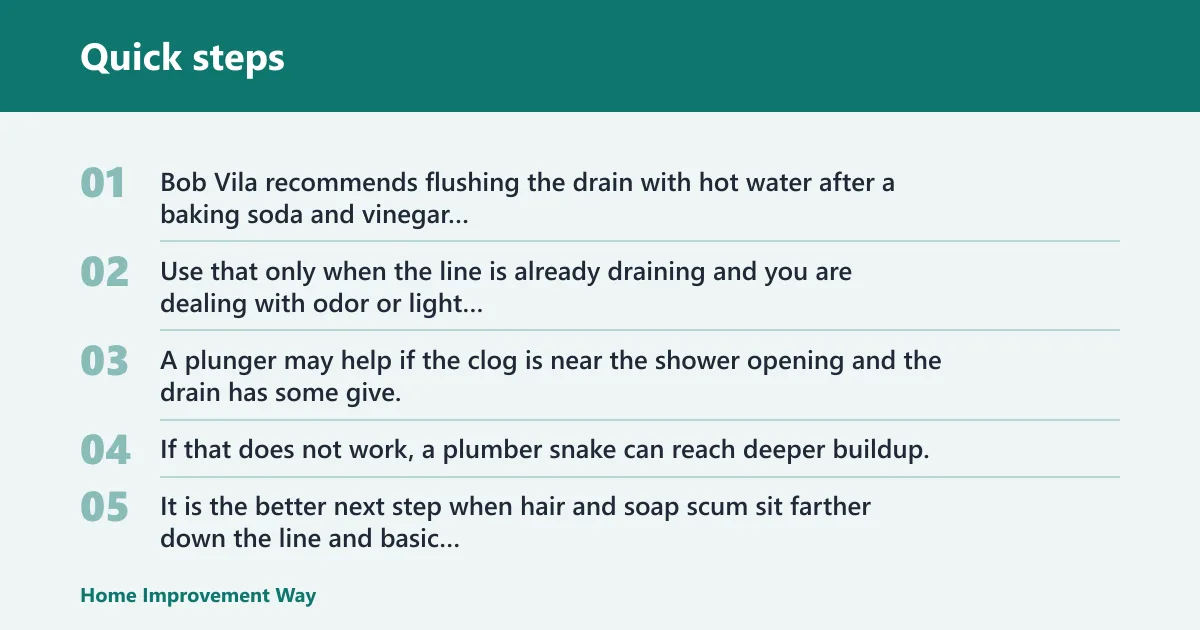
Bob Vila recommends flushing the drain with hot water after a baking soda and vinegar treatment. Use that only when the line is already draining and you are dealing with odor or light residue, not a suspected ice plug.
When a plunger or plumber snake makes sense
A plunger may help if the clog is near the shower opening and the drain has some give. If that does not work, a plumber snake can reach deeper buildup. It is the better next step when hair and soap scum sit farther down the line and basic cleaning fails.
Suppose a 1970s hallway bath shower drains slowly every January, but the guest sink and toilet act normal. A short snake run may clear the trap area, while a frozen branch line would usually need thawing and inspection of the cold space around the piping.
When to stop DIY
Stop if the water level rises, if more than one fixture backs up, or if you suspect the line is frozen inside a wall or crawl space. At that point, more plunging or more chemical treatment can waste time and make the cleanup worse.
If DIY cleaning fails, call a plumber before the pipe cracks or the backup reaches the bathroom floor. A deeper drain clog, vent blockage, or frozen branch line often needs tools beyond what you can safely use from the shower opening.
How do you keep winter drain problems from coming back?
Prevention works best when you match it to the cause. Use a drain strainer to catch debris before it reaches the pipe, keep rarely used traps wet, and reduce buildup before cold weather arrives. None of those steps fixes a frozen line, but all of them help the more common causes.
Use a drain strainer and clean it often
A drain strainer fits over or inside the shower drain opening and catches hair and debris. That simple barrier lowers the chance of a shower drain clog and makes winter slowdowns less likely.
Keep rarely used showers wet enough to protect the trap
Run water into a dry trap to refill it. This Old House suggests that step for traps that have dried out in guest showers or unused baths. If the shower sits vacant for weeks, check it before odors show up.
Reduce buildup before cold weather arrives
Keep grease out of drains, and let it cool in a container before disposal if you need to handle it in the kitchen. Winter pipes are less forgiving when fats and oils harden faster, so keeping that material out of the system matters even if the shower itself never sees grease directly.
Also watch for biofilm. Regular flushing and routine cleaning help, but a persistent odor or recurring slow drain usually means the line needs a deeper clearing or an inspection of the vent and trap.
Frequently asked questions
Why is my shower drain frozen in winter?
It may not be frozen at all. A shower drain in winter is more often a clog, dry P-trap, or vent issue. True freezing is more likely in an unheated space or exterior wall, and it usually shows up as standing water that will not move.
Why is my shower not draining when it’s cold outside?
Cold weather can make a partial clog act worse because fats, oils, and grease harden faster in cold pipes. If the shower gurgles or drains slowly, check for hair buildup, a dry trap, or a vent problem before assuming the line itself is frozen.
Why does my shower drain slowly in winter?
Slow drainage in winter often comes from soap scum, hair, oils, and biofilm narrowing the pipe. Cold pipes make that buildup harder to move. If other fixtures are also slow, the vent or main drain may be part of the problem.
How do I thaw a frozen shower drain?
Warm the area around the pipe slowly, starting with any exposed section in a cold crawl space or wall cavity. Use gentle heat, not boiling water or flame. If the drain does not start moving after safe warming, the blockage may be a clog or a deeper freeze.
How do I unfreeze a shower drain safely?
Keep the shower from filling higher, open access points for warmer air, and use a low-setting hair dryer on visible pipe sections. Avoid direct flame and harsh heat. If the pipe is hidden and the drain stays blocked, stop and call a plumber.
What do I do for frozen drains?
First, confirm that the problem looks like freezing and not a clog or dry trap. Then warm the surrounding area slowly. If water still will not move, or if more than one fixture is slow, you likely have a vent or drain issue that needs professional help.
Sponsored / affiliate links. As an Amazon Associate I earn from qualifying purchases. I may earn additional commission from eligible campaigns.