Is It Normal for a Heat Pump to Blow Cold Air During Defrost?
Yes. A heat pump can blow cool air during defrost for about 3 to 10 minutes, but air that stays cold for longer than about 15 minutes or keeps lowering room temperature may need attention. Ignoring the pattern can mean higher bills, weak heat, or a real fault. This guide gives a quick symptom-to-sign chart for normal defrost, airflow problems, and repair-level issues.
Signs of normal versus abnormal defrost cycles
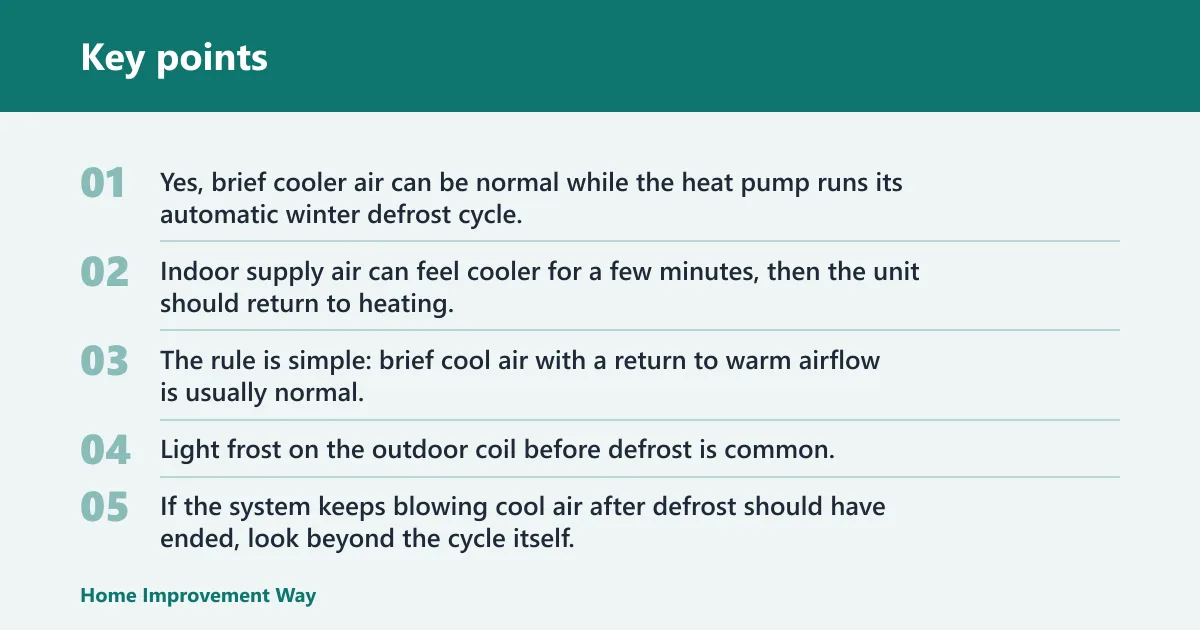


Yes, brief cooler air can be normal while the heat pump runs its automatic winter defrost cycle. The outdoor coil collects frost in cold, damp weather, the system temporarily reverses operation to melt it, and the outdoor fan may pause while the compressor keeps running. Indoor supply air can feel cooler for a few minutes, then the unit should return to heating.
The rule is simple: brief cool air with a return to warm airflow is usually normal. Cool air that keeps going, room temperature that keeps falling, or repeated defrost calls points to a problem worth checking.
What a normal defrost feels like
During a normal cycle, the indoor air may feel less warm for a short stretch, and steam can rise from the outdoor unit as frost melts. Carrier notes supply air around 90°F to 100°F can be normal in heating mode, so a slight dip during defrost does not automatically mean failure.
Light frost on the outdoor coil before defrost is common. Heavy or persistent ice is different.
When cooler air points to a problem
If the system keeps blowing cool air after defrost should have ended, look beyond the cycle itself. A stuck reversing valve, weak refrigerant charge, bad defrost control, or airflow restriction can all make the home feel cold even when the thermostat is calling for heat.
Say your thermostat shows heat mode, the unit blows cooler air for about 6 minutes, then warmth returns and the outdoor coil clears. That fits normal defrost. Suppose the same home gets 20 minutes of cool air, the bedroom temperature drops, and the outdoor coil stays iced over. That is not normal defrost behavior.
How heat pump defrost mode works
Defrost mode is an automatic winter cycle that temporarily reverses operation to melt frost on the outdoor coil. A normal cycle is brief, and the system should return to heating afterward. The indoor blower may keep moving air, which is why the house can feel cooler for a short time.
What the outdoor coil is doing
The outdoor coil can collect frost whenever cold, damp air passes over it. That frost is expected in winter. If the coil becomes heavily iced over or ice keeps returning quickly after defrost, the system is not managing frost the way it should.
Why indoor air can feel cooler for a few minutes
When the heat pump switches into defrost, the outdoor unit stops acting like a heat source for a short time. The indoor air handler may still run, so the air moving through the registers can feel cooler even though the system is operating as designed. AUX can be normal when extra heat is requested, and that backup heat can reduce the cool-air sensation indoors.
How long defrost usually lasts
Defrost mode typically lasts between five and 15 minutes. In frigid periods, it may happen every 30 to 90 minutes. The exact timing varies with equipment and weather, so the cycle length matters less than the pattern: brief and occasional is usually fine, while repeated or continuous cycling is a warning sign.
Heat pump decision table
This table gives a fast symptom-to-sign check. Start with the left column, then match what you see to the likely meaning and the safest next step.
| Symptom | Likely meaning | Safe next check |
|---|---|---|
| Cool air for 3 minutes, steam outside, then heat returns | Normal defrost cycle | Let it finish and watch whether the outdoor coil clears |
| Cool air lasts 20 minutes or more | Possible fault, not a normal cycle | Check thermostat mode, fan setting, and AUX or emergency heat status |
| Repeated ice after defrost | Airflow issue, low refrigerant, or defrost trouble | Inspect the filter, open registers, and note how fast the ice returns |
| Fan set to On | Room air keeps circulating and can feel cool | Change the fan to Auto |
| Filter clogged | Weak airflow and reduced heating output | Replace the filter and recheck airflow at the registers |
| Breaker tripped once | Possible temporary power interruption | Reset only if it was clearly tripped once; if it trips again, call for service |
| AUX appears on the thermostat | Backup heat is helping | Confirm whether AUX is normal for the current weather or load |
What should you check first?
Start with the thermostat, then move to airflow, then power. Auto is usually correct for the fan, and a clogged filter or closed register can make a normal heating system seem weak. If the thermostat shows AUX or you recently changed settings, that detail matters too.
-
Check heat mode.
Make sure the thermostat is set to Heat, not Cool or Off. If the system is in the wrong mode, the symptoms can look like a defrost issue even when the problem starts at the thermostat.
-
Set the fan to Auto.
The fan should be set to Auto rather than On. On can circulate room-temperature air and make the home feel colder during a normal defrost cycle.
-
Inspect the filter.
Replace a clogged filter, since weak airflow can reduce heating performance and worsen icing. If the filter looks dirty enough to restrict flow, change it before assuming the system has failed.
-
Open supply registers.
Make sure registers are open and not blocked by furniture, rugs, or closed dampers. Restricted airflow can cut heat output and make defrost icing more likely.
-
Check AUX or emergency heat.
Auxiliary heat is backup heat and may appear as AUX on the thermostat. Emergency Heat is a manual backup setting and is not a routine fix for normal defrost; use it only if the thermostat instructions call for it or the heat pump is unavailable.
-
Look at the breakers.
Many systems have one breaker for the indoor air handler and one for the outdoor unit. If one breaker tripped once, resetting it may restore operation, but repeated trips mean the system needs service.
Why does it blow cold air but still heat the house?
A heat pump can blow cold air for a few minutes and still keep the home warm overall because the rest of the heating cycle compensates. The most common reasons are a fan set to On, AUX heat carrying part of the load, or short defrost cycles during cold weather.
Fan set
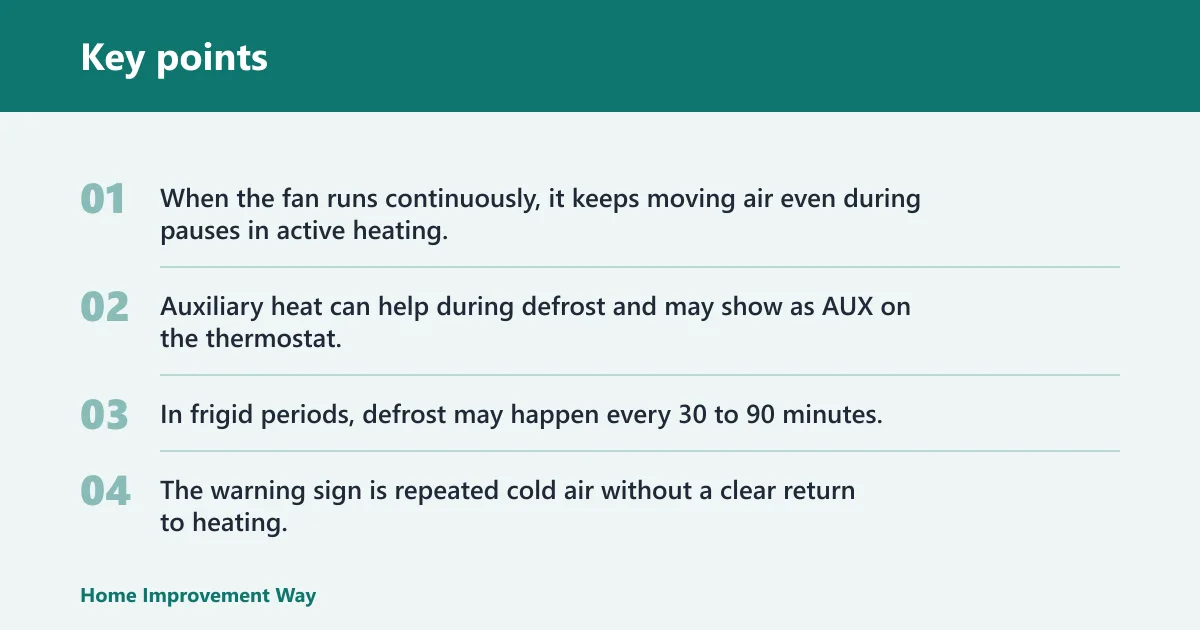
When the fan runs continuously, it keeps moving air even during pauses in active heating. That air may be room temperature or slightly cool, which can feel like a heating problem even when the heat pump itself is working.
Auxiliary heat during defrost
Auxiliary heat can help during defrost and may show as AUX on the thermostat. That backup heat can soften the cool-air effect indoors, but it does not fix a fault if the system is iced up, miswired, or short on refrigerant.
Short defrost cycles in cold weather
In frigid periods, defrost may happen every 30 to 90 minutes. That means you can notice brief cool spells several times a day and still have normal operation overall. The warning sign is repeated cold air without a clear return to heating.
Why is the outdoor unit still iced over?
Light frost that clears during defrost is normal. Heavy or persistent ice is not. If ice stays on the outdoor coil after defrost, or comes back fast, the problem may be low refrigerant charge, restricted airflow, a reversing valve issue, or a defrost control fault.
Normal frost versus heavy ice
Light frost on the outdoor coil can be normal before defrost. Heavy ice that lingers, spreads across the cabinet, or returns quickly is different from a healthy cycle and usually needs service.
Low refrigerant charge
Low refrigerant charge reduces heating capacity and can contribute to faster icing. Low refrigerant usually points to a leak, so the system needs proper repair rather than repeated manual thawing.
Reversing valve or defrost control trouble
The reversing valve switches the system between heating and cooling. If it sticks or is miswired after a thermostat change, the unit can blow cold air in heat mode. Defrost control problems can also keep the unit from clearing ice the way it should.
A common first-timer mistake is to chip at the ice or pour hot water on the outdoor unit. That can damage fins, wiring, or the coil. Leave the ice alone and let the system defrost normally unless a technician tells you otherwise.
What to check before calling for heat pump repair
If the unit still sounds wrong after the basic checks, document the pattern before you call. The best notes are the ones a technician can act on right away: timing, ice pattern, thermostat messages, and power behavior.
-
Record the cycle timing.
Note when the cool air starts and how long it lasts. A cycle that fits the five to 15 minute range may be normal, while repeated or continuous cycles are a warning sign.
-
Photograph the outdoor coil.
Take a clear picture of the ice pattern before it changes. A thin frost layer is different from a solid ice blanket on the coil or cabinet.
-
Save thermostat messages.
Write down whether the thermostat shows AUX, Emergency Heat, or an error message. Smart thermostats can also reveal recent setting changes that matter to the diagnosis.
-
Note breaker behavior.
Record whether one breaker tripped once or whether either breaker keeps tripping. Most systems have separate indoor and outdoor breakers, so that detail helps narrow the fault.
-
List recent changes.
Note any thermostat replacement, wiring work, filter change, or register changes. A new thermostat or recent wiring mistake can affect the reversing valve or fan behavior.
Picture a smart thermostat swap that happened last week. The fan was left on On, AUX appeared more often than before, and the outdoor coil froze hard after each defrost. That combination points away from “normal winter behavior” and toward a setup or control issue.
Frequently asked questions
Is it normal for a heat pump to blow cold air during defrost?
Yes. A heat pump can blow cool air for a few minutes during defrost, and that can be normal if the unit returns to heating afterward. If the air stays cold longer than 15 minutes, keeps dropping the room temperature, or happens with heavy ice that does not clear, the system needs attention.
How long should a heat pump defrost cycle last?
Defrost mode typically lasts between five and 15 minutes, though the exact time varies by equipment and weather. A brief cycle that ends and returns to heat is expected. Repeated or continuous defrost calls are not normal and often point to airflow, control, refrigerant, or valve trouble.
How often should a heat pump go into defrost mode?
During frigid weather, defrost may happen every 30 to 90 minutes. That frequency can be normal in cold, damp conditions. If the unit goes into defrost far more often, or never seems to finish clearing the outdoor coil, check for restricted airflow or a repair issue.
Why does my heat pump blow cold air but still heat the house?
The system may be in defrost, the fan may be set to On, or AUX heat may be helping. In each case, the house can still warm overall even though one stretch of airflow feels cool. The question is whether the unit returns to steady heating after the short cycle.
How do I tell defrost mode from a real heat pump problem?
Normal defrost is brief, the outdoor fan may pause while the compressor continues, light frost clears, and warm air returns after a few minutes. A real problem usually brings repeated ice, long cold-air periods, breaker trips, or a thermostat pattern that does not match normal cycling.
Should I use emergency heat when my heat pump is blowing cold air?
Emergency Heat is a manual backup setting, not a routine fix for normal defrost. Use it only when the heat pump is unavailable or failed, and follow the thermostat’s instructions. If the system is otherwise running normally, check Auto fan, the filter, and the outdoor coil first.
Sponsored / affiliate links. As an Amazon Associate I earn from qualifying purchases. I may earn additional commission from eligible campaigns.