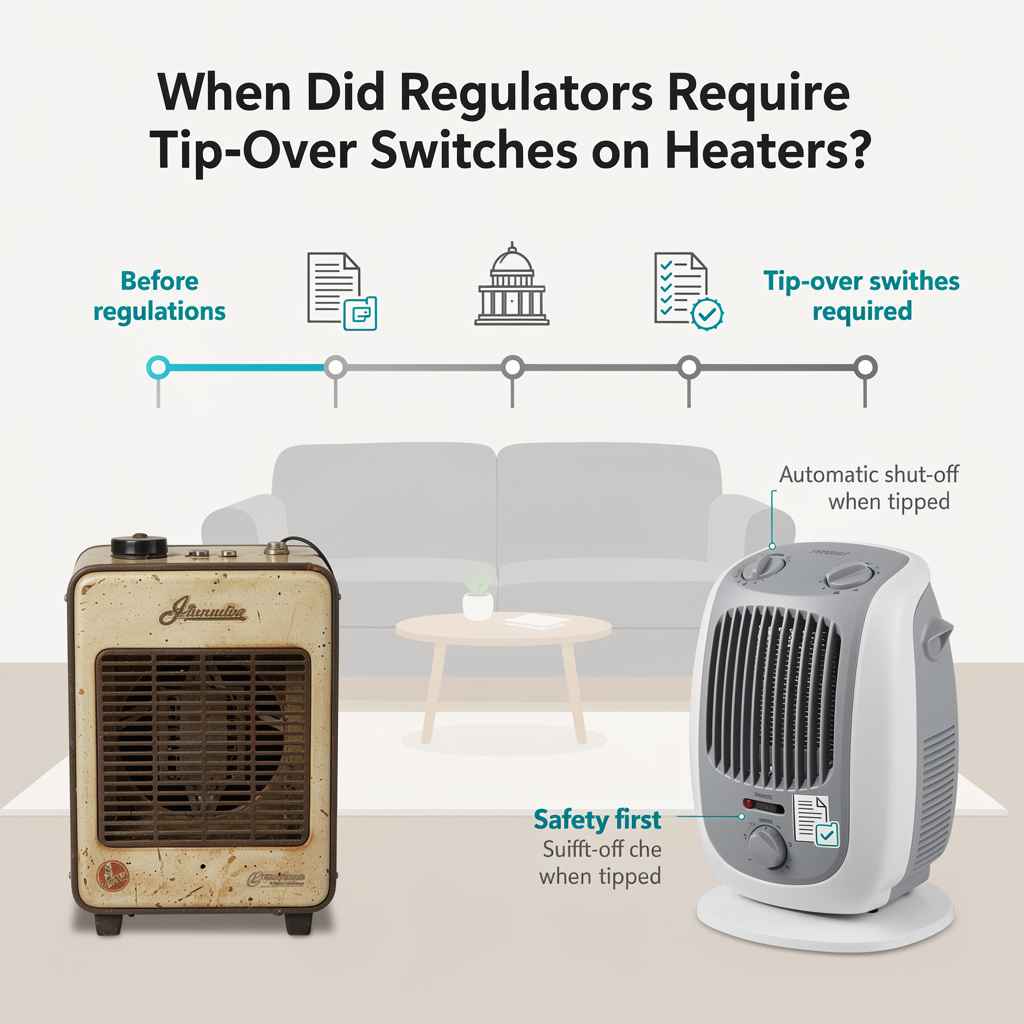
When Did Regulators Require Tip-Over Switches On Heaters?
It’s a question that pops up when you’re looking at a new heater, or maybe after you’ve heard a story about a close call. You see that little switch on the bottom, the one that kills the power if the heater tilts. You wonder, “When did they start making these a rule?” It feels like a pretty basic safety step, but knowing when that rule came into play can make you feel more informed and more secure.
The requirement for tip-over switches on electric heaters in the United States became more widespread and strongly enforced starting in the early 2000s, particularly following updated safety standards like UL 1042, which became critical in the late 1990s and early 2000s. While not a single, exact date for all regulators, this period marks the significant shift towards making them a standard safety feature.
Understanding Heater Safety Standards
Electric heaters are great. They warm up a room fast. But they also have some risks. One big risk is tipping over. If a heater falls, it could start a fire. That’s where tip-over switches come in. These little gadgets are lifesavers. They sense when the heater isn’t upright. Then, they shut the heater off right away. This stops potential fires before they can even start.
A Look Back: Before Tip-Over Switches
Think back to older heaters. Many of them didn’t have these switches. People bought them, used them, and hoped for the best. Sometimes, a pet would bump into a heater. Or a child might accidentally knock it over. In those days, the heater would keep running. That was dangerous. It could ignite carpets, curtains, or furniture. The thought of it is unsettling, right?
My own grandmother had a space heater like that. It was an old, round one. I remember being a little kid and being told never to touch it. She’d always double-check it was stable. But one time, her cat, a big fluffy Maine Coon, jumped onto a nearby table. The vibration was enough. The heater wobbled. It didn’t fall completely, but it tilted enough to scare everyone. Luckily, nothing caught fire. But it was a wake-up call for her. She soon
The Push for Safety: Early Warnings and Standards
Safety experts and fire departments saw this problem for years. They tracked fire reports. Many fires were linked to portable heaters that tipped over. They started talking to manufacturers. They also worked with safety organizations. Groups like Underwriters Laboratories (UL) are key here. UL tests products to make sure they meet safety rules. They develop standards.
These standards are like a roadmap for making safe products. For heaters, the standards began to focus more on stability and automatic shut-off. It wasn’t an overnight change. It was a slow build. Manufacturers heard the warnings. They started seeing the need. Some companies began adding tip-over switches as a special feature. It was a selling point. “Safer for your family!” they’d say.
UL 1042 and the Turning Point
A major step forward came with standards like UL 1042. This standard specifically covers electric heaters. It got updated over time. By the late 1990s and into the early 2000s, UL 1042 became much more stringent. It put a lot more emphasis on features that prevent fires. The tip-over switch was a big part of that.
Manufacturers who wanted their heaters to be UL listed had to meet these newer, stricter requirements. Being UL listed is important. It means a third-party group checked the product. It means it passed safety tests. For consumers, it’s a sign of trust.
So, while there isn’t one single law that said, “All heaters must have this on January 1, 2000,” the UL standards acted as a powerful force. They set the bar higher. They pushed the industry. Companies knew they needed to comply to sell their products widely and safely.
Governmental Influence and Consumer Product Safety
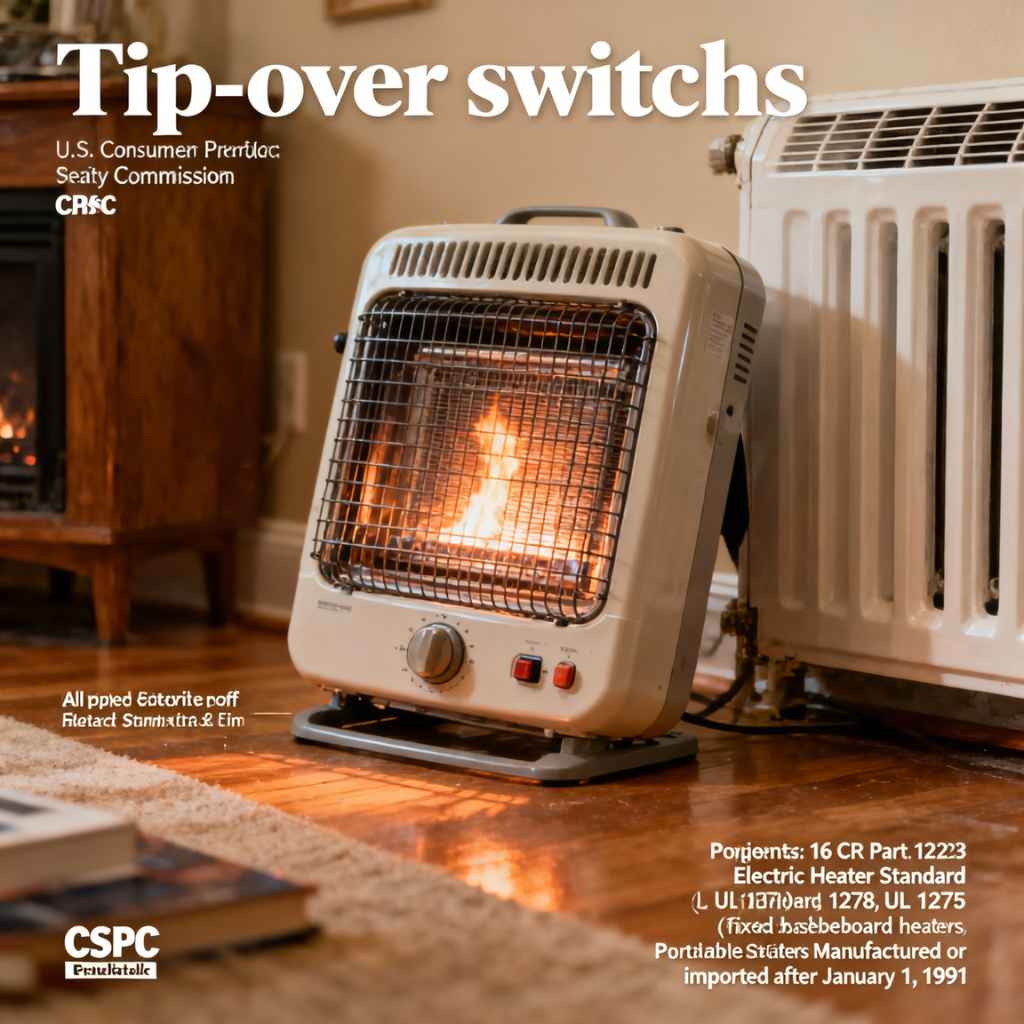
The U.S. Consumer Product Safety Commission (CPSC) also plays a role. They are a government agency. Their job is to protect the public. They look at product safety data. They can issue recalls. They can also work with industries to improve safety. The CPSC tracks incidents involving consumer products. Heater fires are definitely on their radar.
While the CPSC doesn’t directly “mandate” specific features like tip-over switches on every single product line at a fixed date, they influence the market through public awareness campaigns, voluntary recalls, and by encouraging manufacturers to adopt best practices. The increased focus on tip-over protection in industry standards like UL 1042 aligns with the CPSC’s mission to prevent injuries and deaths from consumer products.
By the early to mid-2000s, the market had shifted. Most new heaters coming out had tip-over switches. It became expected. If a heater didn’t have one, it seemed outdated and less safe.
Key Safety Milestones for Electric Heaters
Early Use: Tip-over switches were not standard. Fires were a significant risk.
Industry Awareness: Fire departments and safety groups highlighted the danger of tipping.
UL Standards Evolve: UL 1042 (Electric Heaters) updated to require more fire prevention features.
Early 2000s: Strong emphasis on tip-over switches in updated UL standards.
Market Shift: Most new heaters began including tip-over switches as a common feature.
Why the Delay? Cost vs. Safety
You might wonder why it took so long. Adding a component, even a small one, costs money. Early on, some manufacturers might have resisted. They worried about higher production costs. They might have thought it wasn’t worth the extra expense if they could still sell heaters without it.
But the cost of fires is huge. It’s not just property damage. It’s injury and loss of life. Safety experts argued that the small cost of a tip-over switch was tiny compared to the potential harm. As more data came in and safety standards tightened, the pressure grew. It became harder for companies to ignore the safety aspect.
Experiencing the “Aha!” Moment
I remember a time when I was helping a friend move. We were packing up her old apartment. She had this vintage ceramic heater. It was heavy and looked really cool. But as we were moving it, it tipped. Not completely over, but it leaned hard. The cord pulled. The heater tilted at an angle.
Right at that moment, the heater just. died. Silence. No heat. No fan noise. We looked at it, confused. Then my friend pointed to the bottom. “See? It has that safety switch!” she said. We had completely forgotten about it. We just assumed it would keep going, like the old heaters we grew up with.
It was a real “aha!” moment for me. It wasn’t just a gimmick. It actually worked. It instantly shut off. It made us realize how much we rely on these built-in safety features without even thinking about them. That simple switch prevented a potential disaster in our busy, distracted moment of moving. It felt like a small miracle.
Tip-Over Switch: How It Works Simply
The Switch: A small lever or button at the base.
Gravity at Play: When the heater is upright, the switch is in one position.
Tipping Point: If the heater tilts more than a certain amount, gravity shifts the switch.
Power Cut: The shifted switch breaks the electrical circuit, shutting off the heater.
Modern Heaters and Ongoing Safety
Today, most electric heaters sold in the U.S. have tip-over switches. It’s almost a given. You can find them on space heaters, ceramic heaters, radiant heaters, and more. Even some baseboard heaters have safety features that might include tip-over sensing, though their fixed installation makes tipping less common.
However, it’s always wise to check. When you buy a new heater, look for its safety certifications. UL certification is a good sign. Also, read the product description. It will usually mention the tip-over switch.
Remember, these switches are a safety net, not a guarantee against all harm. You still need to use heaters safely. Keep them away from flammable materials. Don’t leave them running unattended for too long. Make sure they are on a stable, flat surface.
What to Look for When Buying
When you’re shopping for a heater, safety should be a top concern. Besides the tip-over switch, what else matters?
- UL Listed or ETL Certified: These labels mean the product has been tested by a recognized safety lab.
- Overheat Protection: Many heaters have a sensor that shuts them off if they get too hot internally.
- Cool-Touch Exterior: Some heaters are designed to stay cooler on the outside, reducing burn risks.
- Stable Base: Look for a heater with a wide, sturdy base that is less likely to tip.
- Auto Shut-Off Timer: This feature lets you set how long the heater will run, preventing accidental long-term use.
When It’s Normal and When to Worry
The tip-over switch is designed to activate if the heater tilts. This means it’s working normally if it shuts off when it’s knocked over or tipped by accident. That’s exactly what it’s supposed to do!
You should worry if:
- The heater doesn’t shut off when tipped: This is a major safety concern. The switch might be broken or not present.
- The heater shuts off randomly: If it turns off when it’s upright and stable, there might be an internal electrical issue.
- You smell burning plastic or see smoke: Unplug the heater immediately and do not use it again.
Heater Safety Checks
Check for Certification: Always look for UL or ETL marks.
Inspect the Cord: Make sure it’s not frayed or damaged.
Test the Tip-Over Switch: Gently tilt the heater to ensure it shuts off.
Placement Matters: Keep heaters clear of curtains, beds, and other items.
Never Leave Unattended: Especially when children or pets are around.
Quick Tips for Heater Use
Using electric heaters safely is simple if you remember a few key points. Think of it like basic home fire prevention.
- Plug directly into the wall: Avoid using extension cords if possible. They can overheat. If you must use one, make sure it’s heavy-duty and rated for the heater’s wattage.
- Keep space around the heater: Give it at least three feet of clear space. No blankets, furniture, or papers nearby.
- Place on a hard, flat surface: Don’t put heaters on rugs or carpets. These can block vents or ignite.
- Supervise children and pets: They are more likely to accidentally knock a heater over or get too close.
- Turn it off when you leave the room: If you’re going out or going to sleep, turn the heater off.
Myth vs. Reality: Heater Safety
| Myth | Reality |
|---|---|
| All heaters have tip-over switches. | Most new heaters do. Older models may not. Always check. |
| Extension cords are fine for all heaters. | Many heaters need high wattage. Use heavy-duty cords or plug directly into the wall. |
| Heaters are safe to use overnight. | Only if they have safety features like auto shut-off and are placed correctly. Unattended operation is always riskier. |
The Evolution of Consumer Product Safety
The story of the tip-over switch is a great example of how consumer product safety evolves. It’s not usually a single event. It’s a process. It involves:
- Problem Identification: People notice a risk through accidents and data.
- Standard Development: Safety organizations create guidelines to address the risk.
- Industry Adoption: Manufacturers start incorporating these safety features.
- Consumer Awareness: Buyers learn to look for these features and understand their importance.
This cycle makes products safer over time. It’s a continuous improvement process. The early 2000s were a critical time for electric heater safety. It’s when features like tip-over switches became much more common and expected.
Frequently Asked Questions About Heater Tip-Over Switches
When did tip-over switches become mandatory for electric heaters?
There wasn’t a single, universal mandatory date for all types of heaters. However, safety standards like UL 1042 were updated in the late 1990s and early 2000s to strongly recommend or require tip-over switches. This period saw a significant shift where manufacturers adopted them to meet these updated standards and sell products widely.
Are all electric heaters required to have tip-over switches by law?
Regulations can vary. In the U.S., the push for tip-over switches came largely through updated industry safety standards (like UL) and the influence of the CPSC, rather than a single federal law mandating them on every single heater model immediately. However, by the early 2000s, most reputable manufacturers included them to meet safety expectations and market demands.
What happens if my heater doesn’t have a tip-over switch?
If your heater lacks a tip-over switch, you must be extra vigilant. Always place it on a stable, flat surface. Keep it clear of flammable materials and away from children and pets.
Ensure you turn it off when you leave the room or go to sleep. It’s a higher risk, so more careful use is essential.
Can I add a tip-over switch to an old heater?
It is generally not advisable or safe to try and add a tip-over switch to an older heater that wasn’t designed with one. Tampering with the internal wiring can be dangerous and may create new safety hazards. It’s safer to
How do I test if my heater’s tip-over switch is working?
With the heater plugged in (but not necessarily turned on to heat), gently tilt it slightly to one side. You should hear a click or a change, and if it’s operating, the power indicator light should go off. Do not let it fall completely.
If it doesn’t shut off or show signs of deactivation, the switch may not be working.
Are portable kerosene heaters required to have tip-over switches?
Portable kerosene heaters have different safety requirements due to their fuel source. While they often have safety features to shut off if tipped or if the flame goes out improperly, they do not typically use the same type of electrical tip-over switch as electric heaters. Their safety mechanisms are designed around combustion control.
Final Thoughts on Heater Safety
It’s clear that the journey to safer electric heaters has involved many steps. The tip-over switch is a significant one. While there isn’t one exact date for a “law” being passed, the early 2000s marked a crucial period. This is when safety standards evolved. This is when tip-over switches became a common feature in most new heaters. It’s a positive change that helps keep our homes safer. Always be aware of your heater’s features and use it with care.
Sponsored / affiliate links. As an Amazon Associate I earn from qualifying purchases. I may earn additional commission from eligible campaigns.