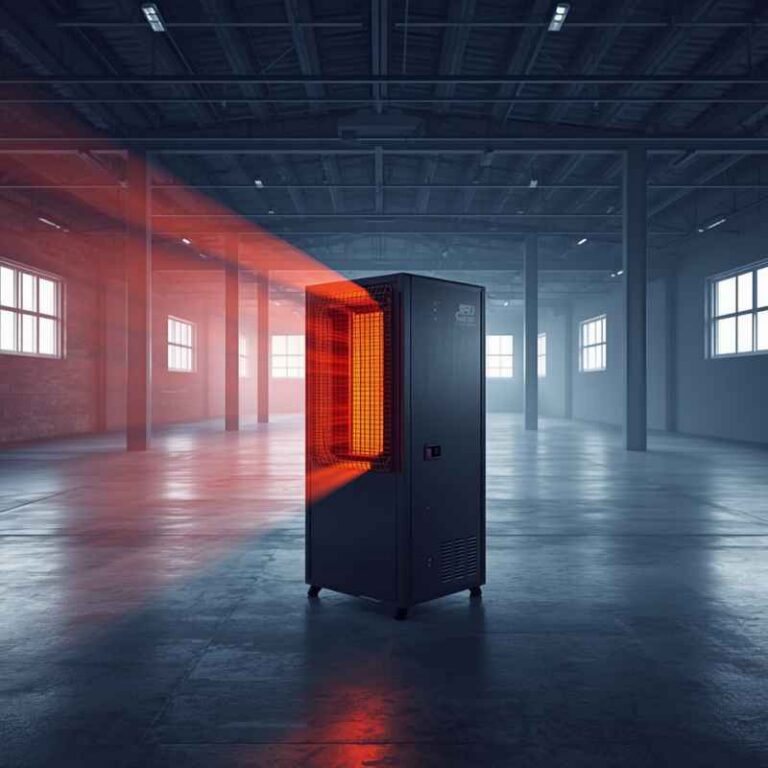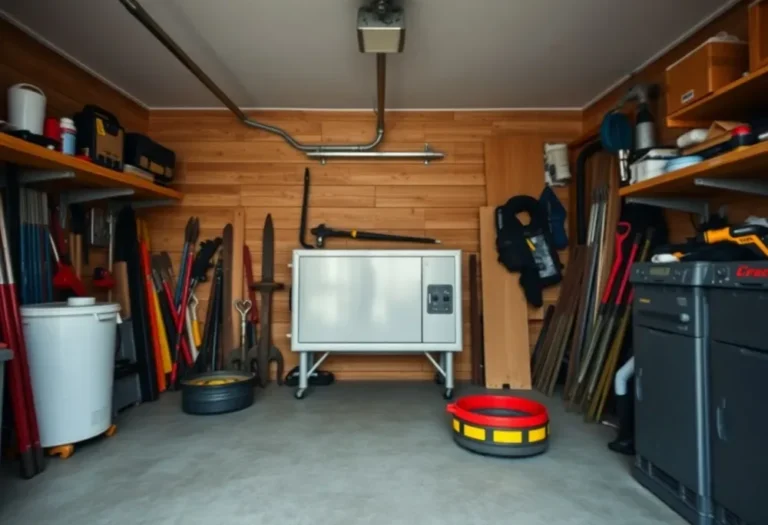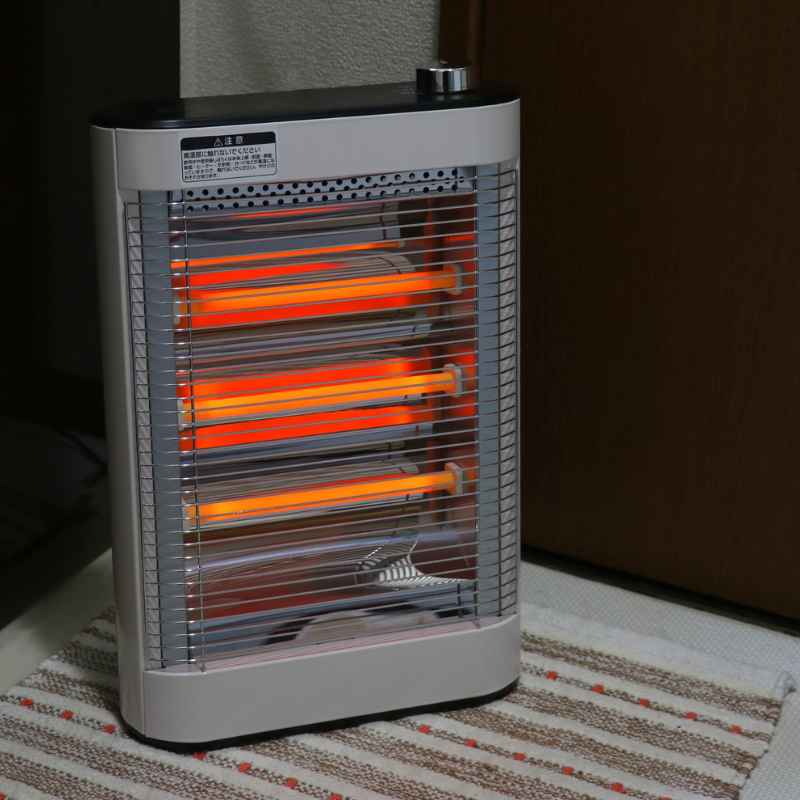
How Much Space Around Electric Heater in Garage?
How much space around an electric heater in a garage is crucial for safety and efficiency, preventing fire hazards and ensuring optimal performance.
This guide breaks down the essential clearance requirements, placement considerations, and safety tips to keep your garage warm and secure.
Simply put, maintain at least 3 feet (approximately 1 meter) of clear space around all sides of an electric heater in a garage, keeping it away from flammable materials like wood, cardboard, and stored items. Always refer to the manufacturer’s specific guidelines for precise clearance recommendations.
Key Takeaways
- Garage electric heater clearance typically requires a minimum of 3 feet (1 meter) on all sides to prevent fires.
- Keep heaters away from flammable materials such as stored items, wood, cardboard, and gasoline.
- Ensure heaters are placed on stable, non-combustible surfaces, away from high-traffic areas.
- Always consult the electric heater’s manual for specific safety and clearance instructions.
- Regularly inspect the heater and surrounding area for any potential hazards.
What is the Importance of Garage Heater Clearance?
Proper clearance around an electric heater in your garage is not merely a suggestion; it’s a critical safety measure designed to prevent devastating fires. Garages often house a variety of flammable materials, including gasoline, oil, paint, solvents, wood scraps, and stored cardboard boxes. These items, when in close proximity to a heat source, can ignite easily.
An electric heater, especially those with exposed heating elements or radiant surfaces, can generate significant heat. Without adequate space, this heat can transfer to nearby combustibles, raising their temperature to ignition points. This can lead to smoldering fires that may go unnoticed until they become uncontrollable, causing extensive damage and posing a severe risk to life.
Beyond fire prevention, maintaining sufficient space also ensures the heater operates efficiently. Overheating can damage the internal components of the heater, reducing its lifespan and performance. Good airflow around the unit allows it to dissipate heat effectively, delivering consistent warmth to your garage space without struggling.
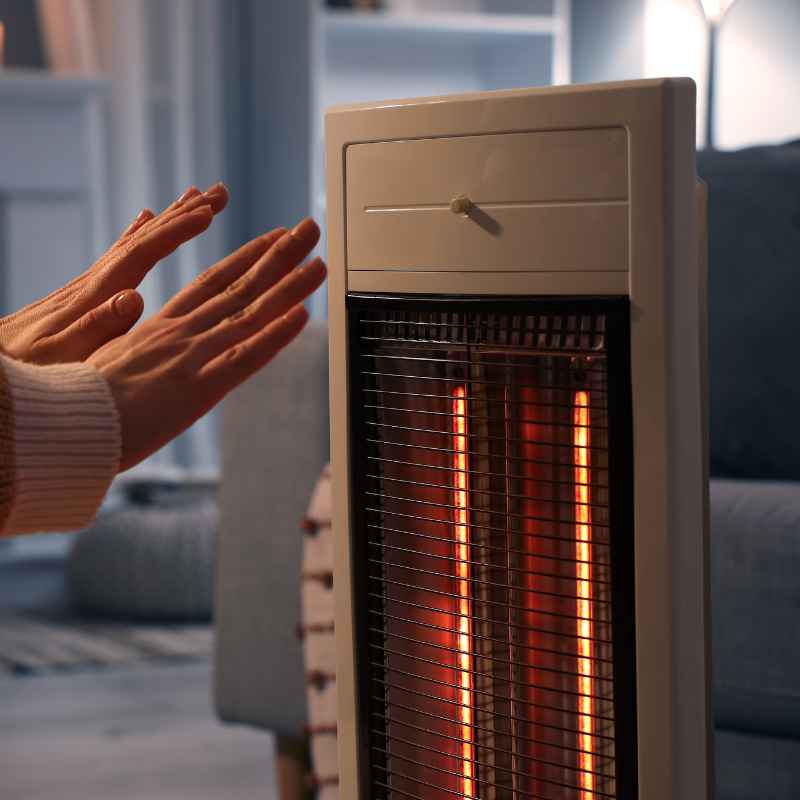
How Does Heat Transfer Affect Heater Placement?
Understanding the three primary modes of heat transfer—conduction, convection, and radiation—is fundamental to determining the correct clearance for your garage electric heater. Each mode plays a role in how heat moves from the heater to its surroundings, and each necessitates specific precautions.
Conduction is the transfer of heat through direct contact. This is why placing a heater directly on a flammable surface like a wooden workbench or a pile of rags is dangerous. Even if the surface isn’t directly touching the heating element, residual heat can transfer to the surface it sits on.
Using a heater designed to sit on the floor, or placing it on a non-combustible material like concrete or a metal stand, mitigates this risk.
Convection involves the movement of heat through the air. Hot air rises, and this natural circulation can carry heat to overhead structures or nearby combustible materials. Therefore, maintaining vertical clearance is just as important as horizontal clearance.
It prevents heat from accumulating near ceilings or shelves, which are often stacked with items.
Radiation is the emission of energy in the form of electromagnetic waves, such as infrared radiation. Many electric heaters, particularly radiant or infrared models, emit heat directly outward. This heat can warm objects at a distance without direct contact.
The intensity of this radiant heat diminishes with distance, making clearance vital to ensure it doesn’t overheat items placed too close.
Understanding the Three Types of Heat Transfer
- Conduction: Heat transfer through direct physical contact. Essential to use non-combustible surfaces for heater placement.
- Convection: Heat transfer via the movement of fluids (like air). Crucial for vertical clearance to prevent heat buildup near ceilings.
- Radiation: Heat transfer through electromagnetic waves. Requires clearance to avoid heating distant objects to ignition points.
Recommended Clearances for Different Heater Types
The specific type of electric heater you use in your garage will influence the exact clearance recommendations. While a general rule of thumb exists, manufacturers often provide detailed guidelines for their models, which you should always prioritize. Different heating mechanisms have varying heat output patterns and risks.
For example, fan-forced heaters or ceramic heaters often have heating elements enclosed within a metal casing and disperse heat via a fan. These generally require less direct radiant clearance than a quartz or infrared heater. However, the hot air expelled by the fan can still pose a risk to nearby stored items if not adequately spaced.
Radiant or infrared heaters, on the other hand, emit heat directly forward, much like the sun. They are designed to warm objects and people directly. Because they generate intense heat at the source, they typically require more generous clearance, particularly in front of the heater, to prevent nearby items from overheating or igniting.
General Clearance Guidelines by Heater Type
| Heater Type | Minimum Front Clearance | Minimum Side/Rear Clearance | Minimum Overhead Clearance |
|---|---|---|---|
| Fan-Forced/Convection | 2-3 feet (0.6-0.9 m) | 1-2 feet (0.3-0.6 m) | 3 feet (0.9 m) |
| Radiant/Infrared | 3-4 feet (0.9-1.2 m) | 2-3 feet (0.6-0.9 m) | 3-4 feet (0.9-1.2 m) |
| Panel/Oil-Filled Radiator | 1-2 feet (0.3-0.6 m) | 1 foot (0.3 m) | 2 feet (0.6 m) |
These are general guidelines; always consult your heater’s manual for precise requirements.
What to Keep Away from Your Garage Heater
Garages are notorious for accumulating a wide array of items that can pose significant fire risks when placed near a heat source. Identifying these materials and ensuring they are well outside the recommended clearance zone is paramount to preventing accidents. Think of anything that can easily burn or combust.
This includes, but is not limited to, gasoline cans, paint thinner, aerosols, cleaning solvents, oily rags, and any other flammable liquids or vapors. These substances are highly volatile and can ignite with minimal provocation. Stored lumber, cardboard boxes, paper products, and even dry vegetation like leaves that might have blown in can also act as fuel.
Additionally, consider items like tarps, plastic sheeting, old furniture, stored textiles, and even certain types of insulation. If an item can burn, it needs to be kept at a safe distance. The heat from the garage heater can cause these materials to dry out, making them more susceptible to ignition, or reach their autoignition temperature over time.
List of Common Flammable Materials in Garages
- Gasoline, kerosene, and other flammable liquids
- Paint, paint thinner, and solvents
- Oily rags and shop towels
- Aerosol cans (hairspray, WD-40, spray paint)
- Cardboard boxes and paper products
- Wood scraps and lumber
- Plastic sheeting and tarps
- Old furniture and textiles
- Stored propane tanks (ensure proper ventilation and distance)
- Dry leaves or other organic debris
Best Practices for Garage Heater Placement
Beyond simply maintaining distance, several other placement strategies can enhance both the safety and effectiveness of your garage electric heater. The goal is to create a secure environment where the heater can operate without risk and efficiently warm the space.
One of the most important considerations is the surface the heater rests on. Always place electric heaters on a stable, level, and non-combustible surface. Concrete floors are ideal.
If your garage has a wooden subfloor or you need to place the heater on a workbench, use a fire-resistant mat or a thick piece of metal sheeting beneath it to prevent heat transfer to the underlying material.
Consider the natural airflow and how you want to heat your garage. If your garage has high ceilings, placing the heater on a slightly elevated, stable platform (made of non-combustible material) can help direct warm air downwards. Ensure the heater is not placed in a high-traffic area where it could be easily knocked over.
It should also be kept away from areas where moisture might accumulate, especially if the heater is not rated for damp environments.
Strategic Placement Checklist
- Surface Stability: Ensure the heater sits on a flat, stable, and non-combustible surface.
- Elevation (if needed): Consider elevating the heater on a safe platform for better heat distribution in garages with high ceilings.
- Traffic Flow: Position the heater away from main pathways to avoid accidental tipping.
- Moisture Avoidance: Keep the heater away from areas prone to leaks or condensation.
- Ventilation: While electric heaters don’t produce exhaust, good general airflow in the garage is beneficial.
- Wall Proximity: Maintain recommended distances from walls and any overhead structures.
- Electrical Safety: Place the heater near a grounded outlet, using an appropriate extension cord if necessary, and ensure the cord is not a tripping hazard.
What are the Risks of Improper Heater Installation?
Improper installation or placement of an electric heater in a garage can lead to a cascade of dangerous situations, extending beyond immediate fire hazards. These risks affect not only the safety of your property but also the longevity and performance of the heater itself.
The most obvious and severe risk is fire. As discussed, insufficient clearance from combustible materials is a leading cause of accidental fires. These fires can spread rapidly, especially in a garage environment filled with flammable items, and can quickly engulf the entire structure, leading to significant property loss and potential injury or fatality.
Another significant risk is electrical hazard. Overloading circuits by using incompatible extension cords or plugging in a high-wattage heater on an inadequately wired circuit can lead to blown fuses, tripped breakers, or even electrical fires within the walls or outlet. Furthermore, placing a heater too close to stored chemicals or fuels can cause their vapors to ignite, leading to explosions.
Consequences of Poor Heater Placement
- Fire Outbreak: Direct ignition of nearby combustible materials.
- Electrical Overload: Tripped breakers, blown fuses, and potential for electrical fires.
- Equipment Damage: Overheating can damage the heater’s components, shortening its lifespan.
- Reduced Efficiency: Inadequate airflow or placement can make the heater work harder and less effectively.
- Explosion Risk: Ignition of flammable vapors from stored chemicals.
- Property Damage: Extensive damage from fire or water used to extinguish it.
- Personal Injury: Burns, smoke inhalation, or injuries from structural collapse.
Frequently Asked Questions
What is the minimum clearance for an electric heater in a garage?
Generally, maintain at least 3 feet (approximately 1 meter) of clear space around all sides of an electric heater. However, always refer to the manufacturer’s manual for the specific model’s required clearances, as these can vary.
Can I place an electric heater on a wooden surface in my garage?
No, you should never place an electric heater directly on a wooden surface. Always use a stable, non-combustible barrier such as a concrete paver, metal sheeting, or a fire-resistant mat between the heater and any wooden surface to prevent heat transfer and potential ignition.
Is it safe to use an extension cord with a garage heater?
It is generally recommended to plug the heater directly into a wall outlet if possible. If an extension cord is necessary, use a heavy-duty cord specifically rated for the amperage of your heater and ensure it is in good condition. Avoid using standard household extension cords, as they can overheat and cause a fire.
How far should a radiant heater be from objects?
Radiant or infrared heaters typically require more clearance than other types due to their direct heat emission. A minimum of 3 to 4 feet (0.9 to 1.2 meters) in front of the heater is often recommended, with slightly less on the sides and rear. Always check the product manual for exact specifications.
What happens if an electric heater is too close to stored items?
If an electric heater is too close to stored items, the heat can cause the materials to slowly heat up over time. This can lead to spontaneous combustion, where the material ignites without an external flame. Additionally, stored flammable liquids or vapors can reach their ignition point and combust rapidly, potentially causing an explosion.
Final Thoughts
Ensuring adequate space around your garage electric heater is a non-negotiable safety requirement. Prioritizing a minimum of 3 feet of clearance, keeping flammable materials at bay, and choosing a stable, non-combustible placement surface are essential steps. Always consult your heater’s manual for the most accurate and model-specific guidance to keep your garage warm and, most importantly, safe.
Sponsored / affiliate links. As an Amazon Associate I earn from qualifying purchases. I may earn additional commission from eligible campaigns.